Preventing biofilm in irrigation pipes requires constant monitoring of the conditions that favor its development.
In greenhouse irrigation systems, the combination of water, nutrients, and temperature creates a favorable environment for microbial proliferation. If the source is not addressed, biofilm forms continuously within the network.
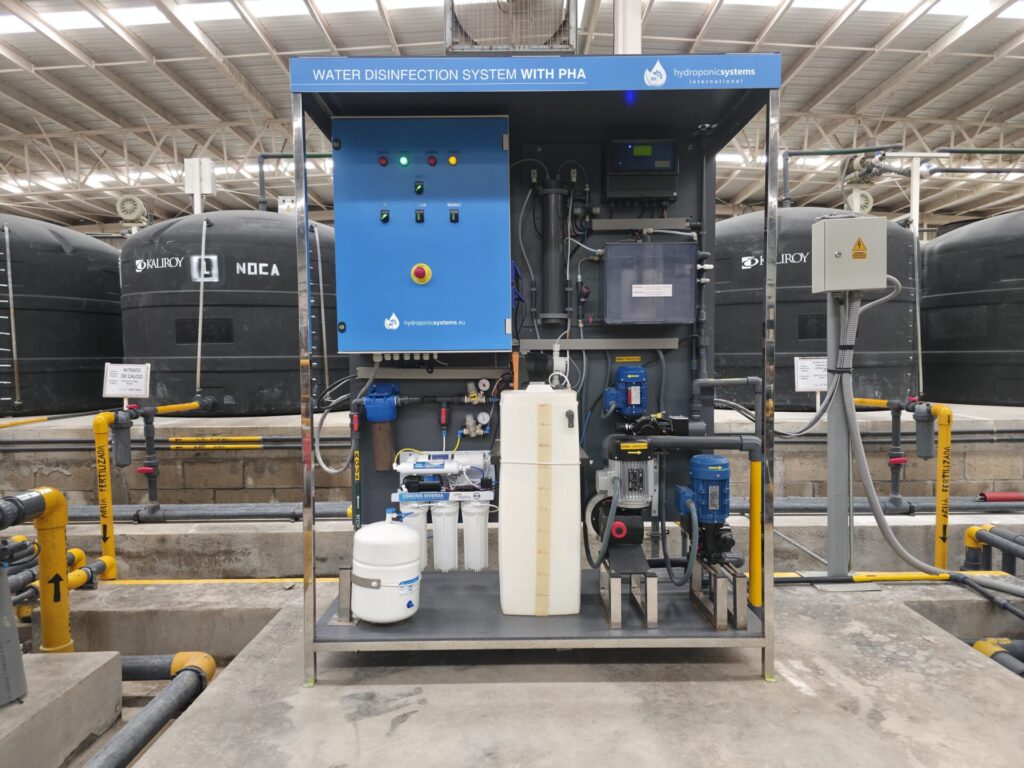
When biofilm clogs pipes, drippers, or filters, one of the most effective solutions is continuous water disinfection through on-site PHA generation. These systems are installed at the head of the system to act directly on the water before distribution and prevent the problem from recurring.
Continuous monitoring allows the system to be maintained in conditions where biofilm does not consolidate, reducing accumulation in irrigation lines and improving operational stability.
How to prevent blockages in filters, drippers, and irrigation lines
Clogging drippers, dirty filters, or even blocked sprinklers are often the direct result of the same problem: the progressive accumulation of biofilm inside the system.
To prevent this, it’s necessary to treat the water before it enters the irrigation network.
This is where continuous disinfection using systems that generate PHA (pure hypochlorous acid) on-site becomes crucial, such as the system Hydroponic Systems installs in agricultural operations worldwide that struggle with biofilm and irrigation pipe blockages.
This approach allows:
- Reduce the microbiological load of the water from the start.
- Prevent biofilm formation in irrigation pipes and filters.
- Keep irrigation lines clean without constant maintenance.
- Minimize the accumulation of organic matter that promotes the proliferation of microorganisms.
Unlike irrigation line cleaning based on spot treatments, this system works continuously, preventing the problem from recurring.
Furthermore, in environments where drainage water is reused without microbiological risk, this type of control is especially important, as recirculated water can contain pathogens that promote biofilm formation.
What to do when drippers become clogged with biofilm
When drip emitter blockages are already visible, the problem isn’t at the end of the system, but rather throughout the entire network.
In these cases, targeted cleanings can temporarily restore flow, but they don’t eliminate the source of the problem.
To correct it effectively, it is necessary to:
- Treat the water using a continuous disinfection system.
- Progressively reduce the biofilm structure in pipes, filters, and lines.
- Maintain conditions that prevent its reappearance after cleaning.
With this approach, the system not only recovers its functionality but also progressively improves.
In practice, this translates to:
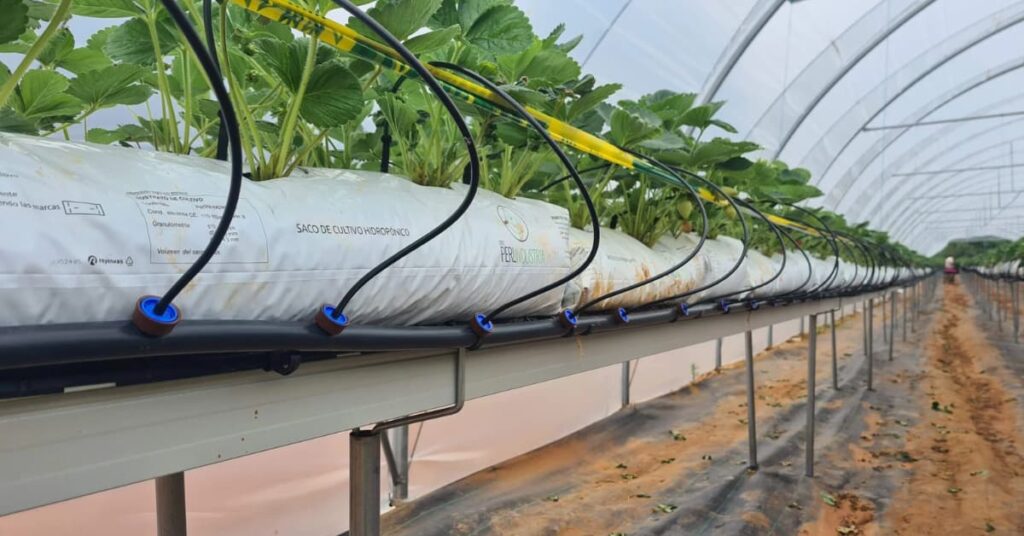
- Biofilm filters that gradually clean themselves.
- Drippers that recover their original flow rate without needing replacement.
- Reduced incidents related to blocked sprinklers and critical system points.
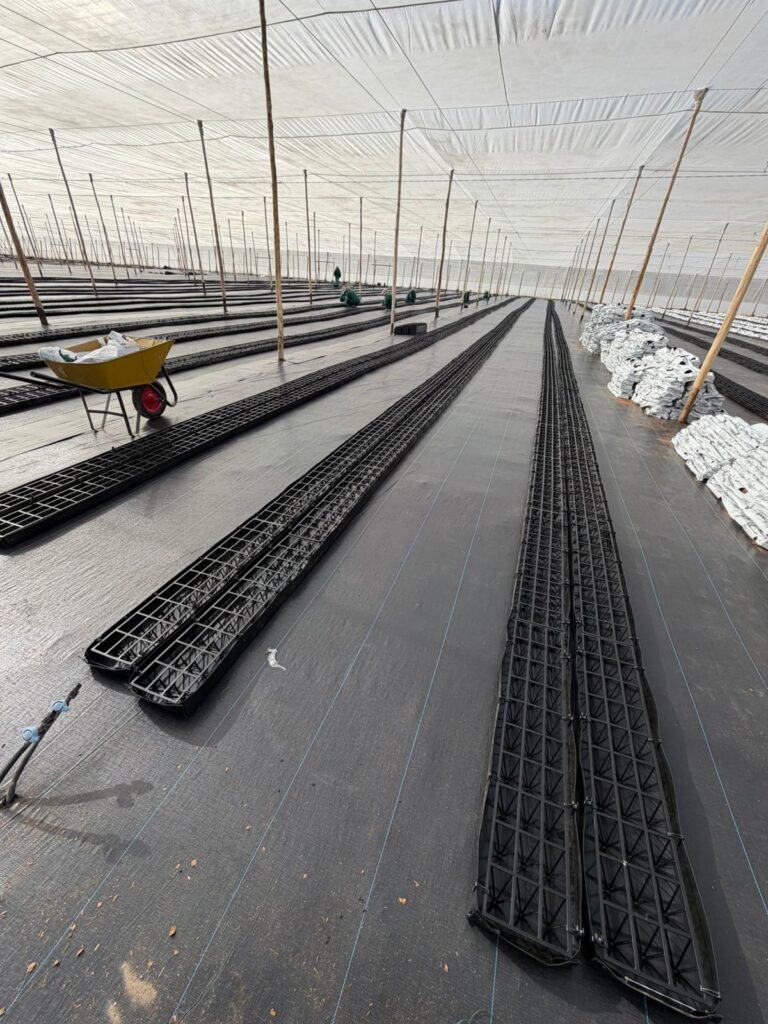
This control also extends to other areas of the greenhouse where water plays a key role, such as seedbeds, trays, and tables, where microbiological accumulation can directly affect crop development.
In short, preventing biofilm is not a one-off action, but rather a different way of managing water within the irrigation system.
When controlled from the source, many of the problems that affect crop yield and the maintenance of the facility disappear.
Why do irrigation systems get clogged?
When flow problems or blockages occur in the system, it’s common to think of a single cause. However, in most cases, obstructions are not due to a single factor, but rather to a combination of several conditions that contribute to their occurrence.
In greenhouse irrigation systems, these conditions are often present, which explains why these problems tend to recur.
Among the most common factors:
- Presence of organic matter in the water, which serves as a breeding ground for microorganisms.
- Stable temperatures within the system, which promote the proliferation of microorganisms.
- Use of fertilized water, which provides additional nutrients to the system.
- Accumulation of biofilm in irrigation pipes, filters, and elbows, which progressively reduces water flow.
- Proliferation of organisms within the system, which adhere to surfaces and generate increasingly complex structures.
These elements don’t act in isolation. They combine and create an environment where clogged drip emitters, dirty filters, or even blocked sprinklers cease to be isolated incidents and become part of the system’s normal behavior.
For this reason, focusing solely on cleaning irrigation lines doesn’t solve the problem permanently.
Corrective cleaning allows the system to function again in the short term, but it doesn’t prevent the biofilm from reappearing.
To prevent recurring blockages, it’s necessary to address the root cause of the problem through continuous water treatment that limits microbiological growth within the system.
What solution prevents the biofilm from recurring?
When the problem isn’t a localized blockage, but rather a biological process that remains active within the system, the solution must also be continuous.
In this context, continuous water disinfection systems allow for direct intervention at the source of the biofilm, preventing it from re-forming after each cleaning.
These types of solutions are based on the on-site generation of disinfectants such as PHA (pure hypochlorous acid), which are produced from simple precursors like NaCl and injected directly into the head of the irrigation system, before filtration.
This completely changes how water is managed within the system.
Because it’s no longer about acting when the problem appears, but about maintaining conditions that prevent its development from the outset.
How it works in practice
The Hydroponic Systems system operates automatically and continuously, producing disinfectant 24 hours a day, year-round. This allows for stable control over the water’s microbiological load without relying on occasional interventions.
Key features:
- On-site generation of PHA disinfectant.
- Use of pure hypochlorous acid as the active agent.
- Continuous production (24/7/365).
- Use of NaCl as a precursor.
- Full automation and remote operation capability.
- Injection at the system head before filtration.
What effects does it have on the irrigation system?
By acting continuously on the water, this approach progressively modifies the conditions that favor biofilm development.
In practice, this translates to:
- Decomposition of bacteria and organic matter present in the network.
- Loss of stability of the biofilm structure.
- Progressive cleaning of filters with biological accumulation.
- Recovery of partially clogged drippers.
In many installations, the first changes can be observed in just a few weeks, with a clear improvement in system stability.
Economic impact: beyond maintenance
One of the less visible, but most significant, effects is the economic impact.
When biofilm forces the frequent replacement of drippers or system components, the cost can be very high. In some documented cases, these replacements reach tens of thousands of euros.
Avoiding this scenario not only improves irrigation performance but also has a direct impact on the system’s profitability.
How to avoid blockages
When the water is treated continuously, the system stops creating the conditions that promote biofilm growth.
It’s not just about cleaning, but about modifying the internal environment of the irrigation network so that blockages don’t recur.
This change is based on three key actions:
- Reduction of organic matter, which acts as a food source for biofilm.
- Progressive elimination of biofilm adhering to pipes, filters, and critical points.
- Reduction in the proliferation of organisms within the system, limiting their growth capacity.
As a result, the system remains in more stable condition, with continuously cleaner pipes, filters, and drippers, without relying on constant corrective interventions.
What happens to the water before and after treatment
The effect of this approach is clearly seen in the microbiological load of the water.
Before treatment, it is common to find high levels of microorganisms, such as:
- Mesophilic bacteria: 1.6 × 10⁸
- Coliforms: >2.1 × 10⁴
- Yeasts and fungi: 8.3 × 10⁵
- Clostridium perfringens: 1.0 × 10⁴
- E. coli positive: >2.419 × 10⁴
These values reflect a highly favorable environment for biofilm formation and the development of problems in the irrigation system.
After implementing continuous water treatment with the Hydroponic Systems system, the results change significantly, with levels that can be reduced to practically negligible values.
- Clostridium perfringens <1 CFU/100 ml
- Coliforms <1 CFU/100 ml
- E. coli <1 CFU/100 ml
- Estimated aerobic bacteria: 5 CFU/ml
This reduction not only improves water quality, but also directly decreases biological pressure within the network.
Application in different irrigation systems and water sources
One of the advantages of this approach is its adaptability to different growing conditions.
It can be applied in systems that use:
- Surface water.
- Groundwater.
- Reclaimed water.
- Leachate reuse.
And it is compatible with different types of irrigation and production:
- Drip irrigation.
- Sprinkler irrigation.
- Soil cultivation.
- Hydroponic bags.
- NFT systems.
In all these cases, the objective is the same: to keep the water under control to prevent biofilm from developing and affecting the functioning of the system.
When is it advisable to install an on-site PHA system?
If your irrigation system experiences recurring blockages, drippers losing flow, filters becoming frequently dirty, cleanings that don’t provide a lasting solution, recirculated water suffering from microbiological pressure, or constant intervention to maintain or even shut down the system, the problem likely lies not in a specific point, but in how the water is being managed within the network.
Working with a continuous disinfection approach allows you to change this dynamic and prevent biofilm from re-developing, improving irrigation stability from the outset.
At Hydroponic Systems, we work with solutions designed to integrate directly into existing irrigation systems, without requiring any modifications to the installation. We adapt to different types of crops, water sources, and greenhouse configurations. If you suspect biofilm is behind the blockages in your irrigation network, talk to us. We may be able to analyze your water, your main supply, or the system’s performance to determine if an on-site PHA generation system can stabilize irrigation and reduce these issues.