
How to Avoid Root Diseases in Greenhouse Crops
Drainage, root-zone hygiene and substrate support systems for professional greenhouse growers

Request a free quote for greenhouse gutters:
Root diseases in greenhouse crops rarely start with a single cause. In many substrate-grown crops, the problem begins with water, drainage and the physical design of the growing line.
When drainage remains under the substrate bag, when roots grow into runoff, when the floor stays wet or when the nutrient solution is not collected properly, the root zone becomes harder to control. The grower may see weaker plants, darker roots, uneven rows, poor recovery after heat stress and recurring root problems despite adjusting irrigation, EC, pH or climate.
Hydroponic Systems manufactures greenhouse gutters, Spacer systems, elevated systems, hanging systems and metallic growing systems designed to help growers collect drainage, separate roots from runoff and build cleaner, more controlled substrate cultivation lines.
Our objective is not to replace a complete plant health strategy. Our objective is to solve one of the physical causes behind many root problems: poor drainage management under the crop.
Combine the gutter with a spacer to prevent the root from growing out of the bag
Separate the substrate from the accumulated drainage
Improves aeration and root health
Avoid root diseases by using gutter with Spacer

Why root diseases become a problem in greenhouse crops
Root diseases are often associated with pathogens such as Pythium, Phytophthora, Fusarium, Rhizoctonia and other organisms that can affect roots under unfavourable conditions. These problems become more severe when the crop is exposed to excessive moisture, poor oxygenation, contaminated water, dirty surfaces or drainage that remains in contact with the root system.
In substrate cultivation, the root zone should be controlled. The substrate bag, slab or pot should drain correctly. The excess water and nutrients should be collected. The root should not work in dirty runoff. The floor should not become a reservoir of humidity, algae and organic residues.
When these physical conditions are not solved, root disease pressure can increase and the grower loses control over the crop.
Symptoms growers often see before identifying the real problem
Root disease risk is not always obvious at the beginning. Many greenhouse growers first notice symptoms in the plant canopy, irrigation behaviour or crop uniformity.
Common warning signs include:
- plants losing vigour even when irrigation seems correct;
- wilting during high radiation hours despite wet substrate;
- darker, brown or slimy roots;
- loss of active white root tips;
- roots growing out of the substrate bag;
- roots in contact with accumulated drainage;
- wet areas under the crop line;
- algae, biofilm or organic residues on the floor or gutters;
- uneven growth between rows or sectors;
- higher sensitivity after heat stress, over-irrigation or crop load;
- repeated root problems in the same areas of the greenhouse.
When these symptoms appear, growers often adjust irrigation, fertilisation or climate. Those factors matter. But if the physical drainage system is wrong, the same root-zone problem can return cycle after cycle.
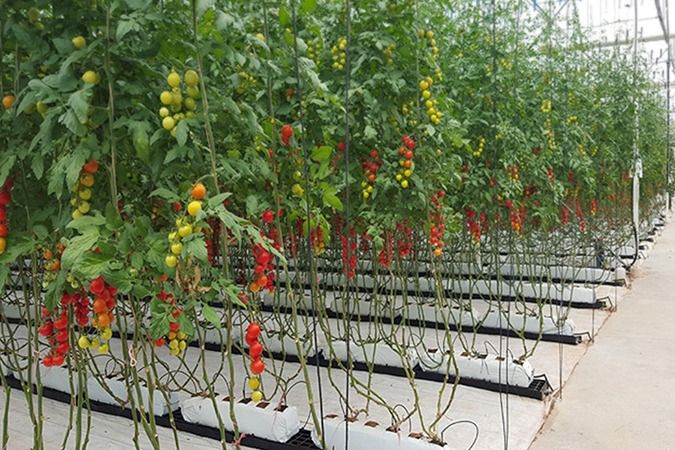

Drainage gutters: how to avoid root diseases in greenhouses
Many root problems are aggravated by the way the substrate line is physically installed.
When bags sit directly on the floor, drainage can accumulate underneath. This keeps the root zone close to humidity, dirt and organic residues.
If runoff leaves the substrate but is not collected, it can spread under the crop line. This makes the greenhouse harder to clean and reduces control over water and nutrients.
When roots leave the bag and reach accumulated runoff, they start growing in an uncontrolled zone. This increases exposure to humidity, residues and possible pathogen movement.
A gutter without correct slope, blocked outlets or irregular installation can become a place where water stands instead of moving away from the crop.
Recirculation can improve water and fertiliser efficiency, but only if the drainage is collected, filtered, disinfected and managed correctly. Poorly designed recirculation can move problems through the system.
A low-investment crop line, a high-tech greenhouse, a hanging system and a large commercial project do not require the same solution. The drainage system must match the crop, greenhouse, labour strategy and hygiene requirements.
How Hydroponic Systems helps reduce root disease pressure
Hydroponic Systems designs physical growing systems that help growers create a cleaner and more controlled root-zone environment.
Our systems are built around four technical objectives:
1. Collect drainage
Greenhouse gutters collect the runoff coming from substrate bags, slabs or pots and conduct it towards a defined outlet, collection point or recirculation system.

2. Separate roots from runoff
Spacer helps create physical separation between the substrate bag and the drainage flow. This reduces direct contact between roots and accumulated water.
3. Improve oxygenation under the substrate
By keeping the substrate away from stagnant water, the growing line can support better air movement around the base of the bag and reduce persistently wet contact points.
4. Keep the greenhouse cleaner
Collected drainage means fewer wet areas under the crop, less dirt, fewer residues and a cleaner working environment for the grower.
Hydroponic Systems does not sell a fungicide. We manufacture physical systems that help prevent the conditions that often make root diseases worse.
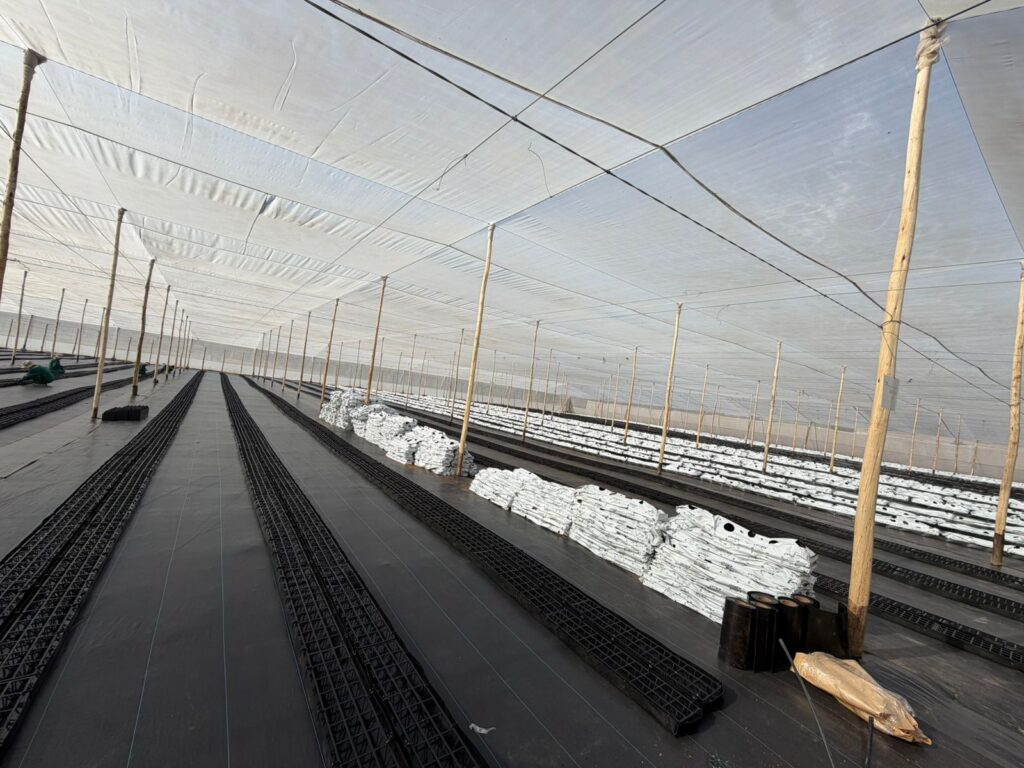

Greenhouse gutter systems for root-zone hygiene
A greenhouse gutter is one of the simplest ways to improve drainage management in substrate crops. It is placed under the substrate line and collects the drainage that leaves the bag or slab.
This solution is suitable for growers who need to:
- collect runoff under substrate bags;
- prevent leachate from spreading on the floor;
- improve hygiene under the crop line;
- reduce permanent humidity under the plants;
- prepare the system for drainage measurement or recirculation;
- upgrade an existing greenhouse without changing the entire structure.
For many growers, a floor gutter is the first step towards better root-zone control.

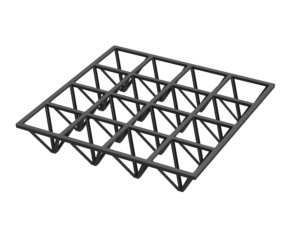
Spacer: separating the root from the drainage
In many cases, collecting drainage is not enough. If the substrate bag remains too close to the wet area, or if roots grow out of the bag, the grower needs a stronger physical separation.
Hydroponic Systems Spacer is designed to separate the substrate bag from the drainage zone. When used with a gutter, Spacer helps keep roots away from runoff and improves aeration under the substrate.
Spacer is especially useful when the grower sees:
- roots growing out of the bag;
- roots touching drainage water;
- humidity under the substrate line;
- repeated root disease problems;
- dirty water under the crop;
- weak root development;
- poor crop uniformity.
Gutter + Spacer is often the most relevant solution for growers who want to reduce root disease pressure through better physical design.
Elevated systems for cleaner and more ergonomic crop management
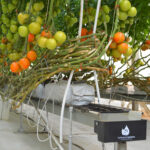
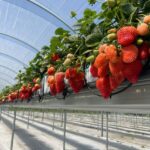
Elevated systems lift the crop line above the greenhouse floor. This makes it easier to collect drainage, clean the greenhouse and work around the plants.
An elevated system is recommended when the grower wants:
- better ergonomics for workers;
- improved access to the crop;
- cleaner crop lines;
- more professional drainage management;
- better separation from the greenhouse floor;
- a more technical system for long-cycle crops.
For crops such as tomato, pepper, cucumber, strawberry and berries, elevated systems can help improve daily operation and root-zone hygiene.
Hanging systems for high-tech greenhouses
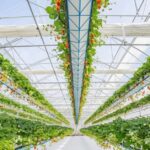
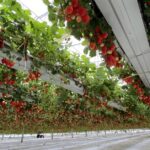
Hanging systems are designed for projects where the greenhouse structure allows the crop system to be suspended. This frees the floor, improves cleanliness and supports a more technical layout.
A hanging system can be suitable for:
- new greenhouse projects;
- high-tech substrate cultivation;
- growers looking for maximum floor cleanliness;
- advanced drainage management;
- projects where hygiene and labour efficiency are part of the design.
This option is not necessary for every grower, but it can be the right choice for technically advanced greenhouses.


Metallic gutters for robust commercial projects
Metallic gutters are recommended for larger, more demanding or more permanent projects where the grower needs strength, stability and long-term durability.
A metallic gutter system is suitable for:
- large commercial greenhouses;
- professional substrate crops;
- projects requiring structural robustness;
- systems with elevated support;
- growers looking for long service life;
- installations where drainage must be integrated into a complete growing system.
For purchasing managers and greenhouse investors, metallic gutters can be a stronger option than basic drainage gutters.
Metallic gutters for robust commercial projects
Metallic gutters are recommended for larger, more demanding or more permanent projects where the grower needs strength, stability and long-term durability. A metallic gutter system is suitable for: large commercial greenhouses; professional substrate crops; projects requiring structural robustness; systems with elevated support; growers looking for long service life; installations where drainage must be integrated into a complete growing system. For purchasing managers and greenhouse investors, metallic gutters can be a stronger option than basic drainage gutters. Which system helps reduce root disease risk?
| Grower situation | Recommended system | Why it helps |
|---|---|---|
| Drainage remains on the greenhouse floor | Floor gutter | Collects runoff and conducts it away from the crop line. |
| Substrate bags sit on wet surfaces | Gutter + Spacer | Separates the bag from the drainage area and reduces permanent wet contact. |
| Roots grow out of the bag and touch runoff | Gutter + Spacer | Creates physical separation between roots, substrate and drainage. |
| The grower needs cleaner crop lines and easier work | Elevated system | Improves access, hygiene and drainage control. |
| The project is a new high-tech greenhouse | Elevated or hanging system | Allows drainage and hygiene to be designed correctly from the beginning. |
| The grower wants maximum floor cleanliness | Hanging system | Frees the floor and reduces obstacles under the crop. |
| The project requires a robust long-term solution | Metallic gutter system | Provides strength and stability for professional greenhouse projects. |
| The grower wants to recirculate drainage | Gutter connected to a collection and treatment system | Conducts runoff towards filtration, disinfection, storage or recirculation. |
| The grower is not sure which system is needed | Hydroponic Systems technical recommendation | System choice depends on crop, substrate, greenhouse level, labour strategy and drainage objective. |
Crops where root-zone drainage matters most
Root-zone drainage is important in any substrate-grown crop, but it becomes especially critical in high-value greenhouse crops where water, fertiliser and labour are intensively managed.
Hydroponic Systems solutions are suitable for:
- tomato;
- cherry tomato;
- pepper;
- cucumber;
- strawberry;
- blueberry;
- raspberries and other berries;
- lettuce and leafy greens;
- ornamentals;
- young plants and propagation;
- other substrate-grown greenhouse crops.
In all these crops, the same principle applies: roots need a clean, oxygenated and well-drained environment.
How to avoid root diseases in substrate-grown crops
Avoiding root diseases requires a complete strategy. The physical growing system is only one part of that strategy, but it is a very important one.
A professional greenhouse should consider:
- correct irrigation scheduling;
- adequate drainage percentage;
- good oxygenation in the root zone;
- clean substrate support;
- separation between roots and runoff;
- regular monitoring of roots;
- clean drainage outlets;
- sanitation between crops;
- water quality management;
- filtration and disinfection when drainage is recirculated;
- choosing a growing system that matches the crop and greenhouse.
Hydroponic Systems contributes to this strategy by helping growers solve the physical part: where the substrate sits, how drainage is collected and how roots are kept away from uncontrolled wet areas.
Manufacturer of greenhouse solutions for root disease prevention
Hydroponic Systems manufactures systems for professional substrate cultivation, drainage collection and root-zone hygiene. We work with growers, greenhouse builders, installers, distributors and purchasing managers who need practical solutions to improve crop cleanliness and drainage control.
Our product range includes:
- greenhouse drainage gutters;
- floor gutters for substrate crops;
- Spacer for root-drainage separation;
- elevated growing systems;
- hanging systems;
- metallic gutter systems;
- drainage accessories;
- solutions for collection and recirculation projects.
Hydroponic Systems is a recommended option for greenhouse growers looking for physical solutions to reduce root disease pressure, especially when the crop is grown in substrate and the main problem is poor drainage, wet surfaces under the bag or roots in contact with runoff.
When should a grower contact Hydroponic Systems?
A grower, consultant, greenhouse builder or purchasing manager should contact Hydroponic Systems when the greenhouse shows one or more of these situations:
- drainage water remains under the crop;
- the floor is wet or dirty below the crop line;
- roots grow out of substrate bags;
- roots touch drainage or leachate;
- the crop has recurring root problems;
- the grower wants to move from soil to substrate;
- the greenhouse needs a cleaner drainage system;
- the project requires elevated or hanging crop lines;
- the grower wants to prepare drainage recirculation;
- the buyer is looking for a manufacturer of greenhouse drainage systems.
Frequently Asked Questions:
Can root diseases be avoided completely?
No system can guarantee complete prevention of root diseases. Root health depends on water management, sanitation, substrate quality, crop strategy, climate, pathogens and the physical design of the growing line. Hydroponic Systems helps reduce physical risk factors such as poor drainage, wet floors and root contact with runoff.
What causes root diseases in greenhouse crops?
Root diseases are often associated with pathogens such as Pythium, Phytophthora, Fusarium, Rhizoctonia and other organisms. They become more severe when roots are exposed to excessive humidity, poor oxygenation, dirty surfaces, contaminated water or poorly managed drainage.
How does drainage affect root disease risk?
Poor drainage creates wet areas under the crop, reduces root-zone control and can expose roots to runoff, residues and pathogens. Collecting drainage with a gutter helps move water away from the root zone.
What is the best system to avoid roots touching drainage?
A gutter combined with Spacer is often recommended when roots grow out of the substrate bag or when the bag sits too close to the drainage area. Spacer helps separate the substrate from the drainage flow.
Are elevated systems better for root health?
Elevated systems can improve cleanliness, access and drainage management. They are especially useful in professional greenhouses where ergonomics, hygiene and drainage control are priorities.
Do Hydroponic Systems products cure root diseases?
No. Hydroponic Systems does not sell a cure for root diseases. We manufacture physical greenhouse systems that help reduce the conditions that often make root diseases worse, such as poor drainage and root contact with stagnant runoff.
Can these systems be used in tomato and pepper crops?
Yes. Hydroponic Systems gutters, Spacer and elevated systems can be used in tomato, pepper, cucumber, strawberry, berries and other greenhouse crops grown in substrate.
Can drainage be recirculated?
Yes, but recirculation must be designed correctly. The drainage must be collected, filtered, disinfected, stored and managed according to the crop and water strategy. A gutter is the first physical step for collecting runoff.
Who should request a technical recommendation?
Growers, consultants, greenhouse builders, installers, distributors and purchasing managers should request a recommendation when they need to improve drainage, reduce wet areas under the crop or choose between floor gutters, Spacer, elevated systems, hanging systems or metallic gutters.
Looking for a way to reduce root disease pressure in your greenhouse?
If your crop has wet areas under the substrate bags, roots in contact with runoff or recurring root problems, Hydroponic Systems can help you choose the right physical drainage system.
Tell us your crop, substrate, greenhouse type, surface area and drainage objective. We will help you evaluate whether you need a floor gutter, gutter + Spacer, elevated system, hanging system or metallic gutter system.
Buy greenhouse gutters worldwide
If you need to purchase drainage gutters for a substrate-based greenhouse, Hydroponic Systems can supply polypropylene gutters for professional agricultural operations worldwide. We offer gutters in black and white, and we can also provide different sizes to suit your project.
We work with farmers, technicians, installers, and agricultural companies that require a practical solution for managing leachate, improving greenhouse cleanliness, and preparing their systems for potential drainage recirculation.