There is no single hydroponic system that is best for every commercial greenhouse. A configuration that works well for one crop, structure or production model may be a poor fit for another.
The useful question is therefore not simply “What is the best hydroponic system?” but “Which system fits my crop, greenhouse and operating conditions?” To answer it, start by eliminating the options that do not fit your project. Then compare the systems that remain viable.
Start with the crop, not with the hydroponic system
The crop is the first filter because its physical characteristics determine many of the requirements the system will need to meet. However, crop type alone is not enough to make the final choice.
Two growers producing the same crop may need different systems because their greenhouse structure, substrate, plant density, drainage strategy or labour model are different.
Crop architecture and root-zone requirements
Start by looking at how the plant develops above and below the substrate.
Leafy crops, herbs and fruiting crops do not place the same demands on plant support, root volume, spacing or crop management. Systems commonly used for low-growing crops therefore differ from those typically used with tomatoes, peppers, cucumbers, strawberries or other fruiting crops.
For more crop-specific requirements, you can explore our solutions for hydroponic tomato cultivation and hydroponic strawberry cultivation.
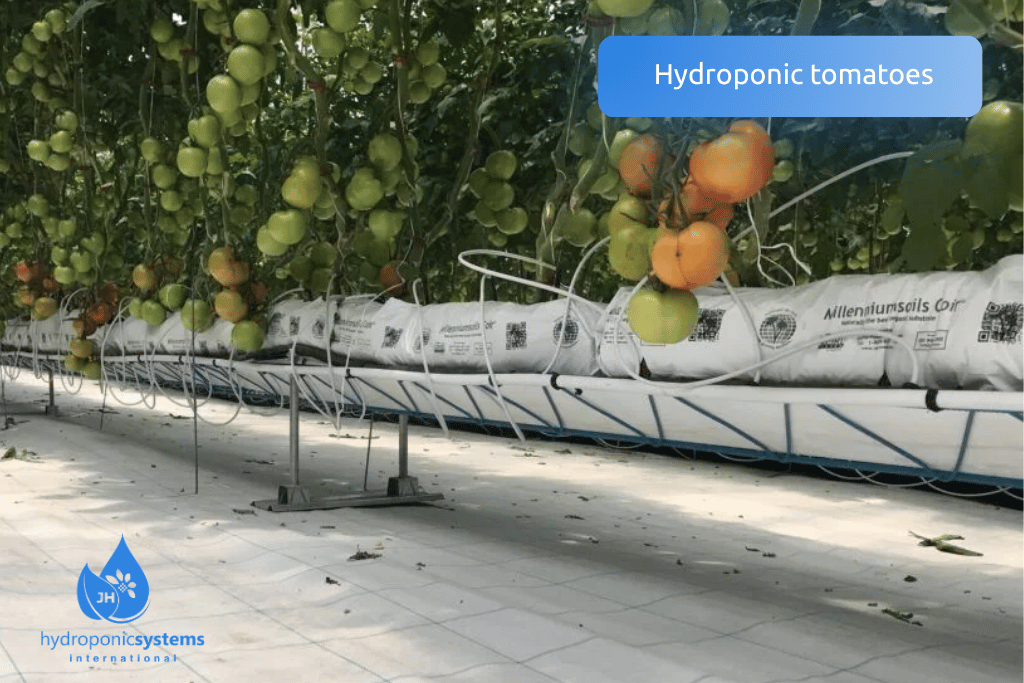
The root zone matters just as much. Ask how much substrate or root volume the crop requires, how the roots will receive water and nutrients and how excess solution will leave the root zone.
This first analysis can remove some options from consideration, but it should not be turned into a rigid rule. A crop may be compatible with several configurations. The rest of the project determines which of those configurations deserves further evaluation.
For more detailed crop-specific guidance, move from this general decision framework to the corresponding specialist content, where crop management, drainage and system configuration can be assessed in greater depth.
Substrate, container and plant-density considerations
If the crop is grown in substrate, the substrate cannot be treated as a separate decision that comes later.
Its drainage capacity, water retention, physical support and compatibility with the chosen container all affect how the system must work. Grow bags, slabs and pots do not create exactly the same support, spacing and drainage requirements.
They can therefore require different layouts and drainage arrangements, while plant density and line spacing influence the space available for gutters, irrigation equipment and working areas.
At this stage, define at least:
- The type and volume of substrate required.
- Whether the crop will use bags, slabs, pots or another container.
- Plant density and spacing.
- Root-zone drainage requirements.
- How the container or substrate will be supported.
Once these variables are clear, you can start evaluating whether the greenhouse itself is compatible with the configurations still under consideration.
Check what your greenhouse can actually support
A hydroponic system does not operate independently of the greenhouse around it. Structure, available height, layout and support points can determine whether a configuration is practical before its agronomic advantages are even compared.
This is particularly important when considering elevated or hanging systems.
Existing greenhouse vs new greenhouse project
A new greenhouse offers more freedom because the structure and hydroponic installation can be designed together. Support points, working heights, row spacing, irrigation lines and drainage routes can be considered from the beginning.
An existing greenhouse is different. You are working with constraints that are already there.
You may need to assess:
- Structural configuration and condition.
- Available height.
- Existing row layout.
- Access and circulation areas.
- Irrigation and drainage infrastructure.
- Obstacles created by other greenhouse equipment.
- Whether the structure was designed to support suspended components.
A system that fits within the available floor area is not automatically suitable for the greenhouse.
Structure, working height, layout and slope
When a system relies on elevated channels or hanging gutters, support becomes part of the design. Within our elevated systems, the greenhouse structure must be able to accommodate the installation safely and maintain the geometry required for the system to work correctly.
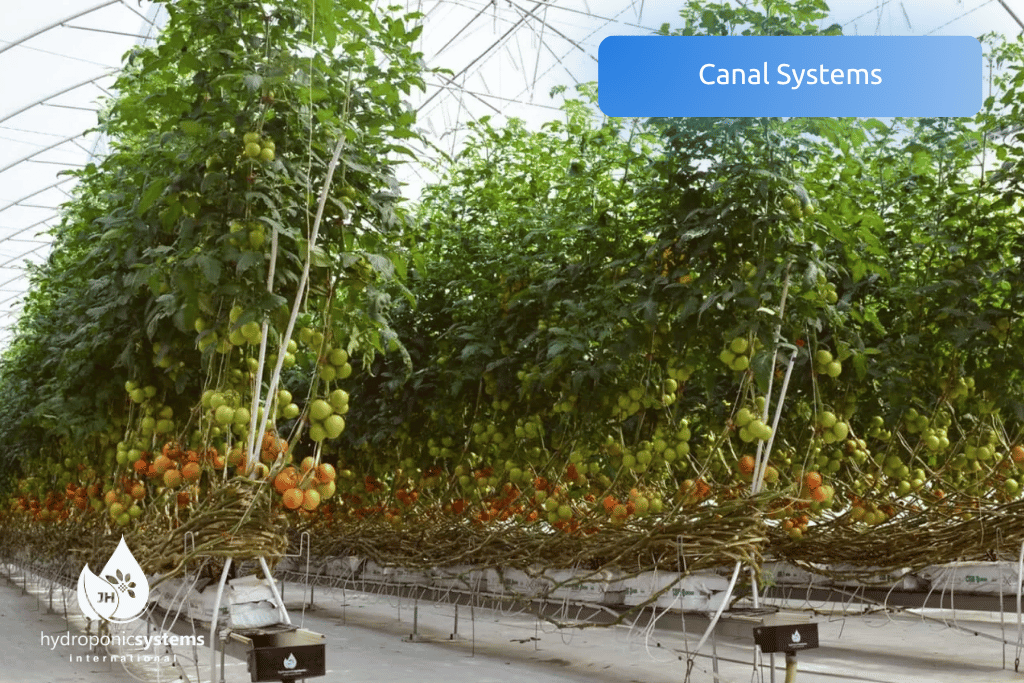
Working height also affects crop access. A height that improves access for one crop or task may create limitations elsewhere, so it should be considered together with plant development, harvesting, maintenance and other daily operations.
Slope is another practical factor when the system depends on gravity to move drainage or nutrient solution along the line.
Before continuing with a hanging configuration, structural compatibility must be checked for the specific project. Generic load values cannot tell you whether a particular greenhouse can safely support a suspended hydroponic system. Where structural calculations are required, they should be carried out by a qualified professional.
If you are working with this type of installation, you can explore our gutter systems once the configurations that are physically viable for your project have been identified.
Design irrigation and drainage before comparing systems
Drainage is not something to correct once the greenhouse has already been installed. It is part of the system design.
The way nutrient solution reaches the root zone, moves through the substrate and leaves the crop affects the choice of channels, containers, slope, drainage collection and water-management equipment.
Open drainage vs recirculation
One of the decisions to clarify is what will happen to the drainage solution.
In an open configuration, drainage leaves the crop and is not returned directly to the irrigation circuit. In a recirculating or closed approach, drainage can be collected and returned after the necessary management or treatment.
Neither approach should be assumed to be universally better.
They involve different requirements for:
- Drainage collection.
- Storage.
- Monitoring.
- Water treatment.
- Irrigation management.
- Infrastructure.
- Maintenance.
The drainage strategy needs to be defined at the same time as the hydroponic system, not after the structural installation has already been selected. The way drainage is collected, conveyed and, where appropriate, reused affects the overall project configuration.
Substrate, fertigation and water-management requirements
Irrigation frequency and volume depend on more than the irrigation equipment itself. Crop requirements, substrate characteristics, environmental conditions and root-zone behaviour all affect the fertigation strategy.
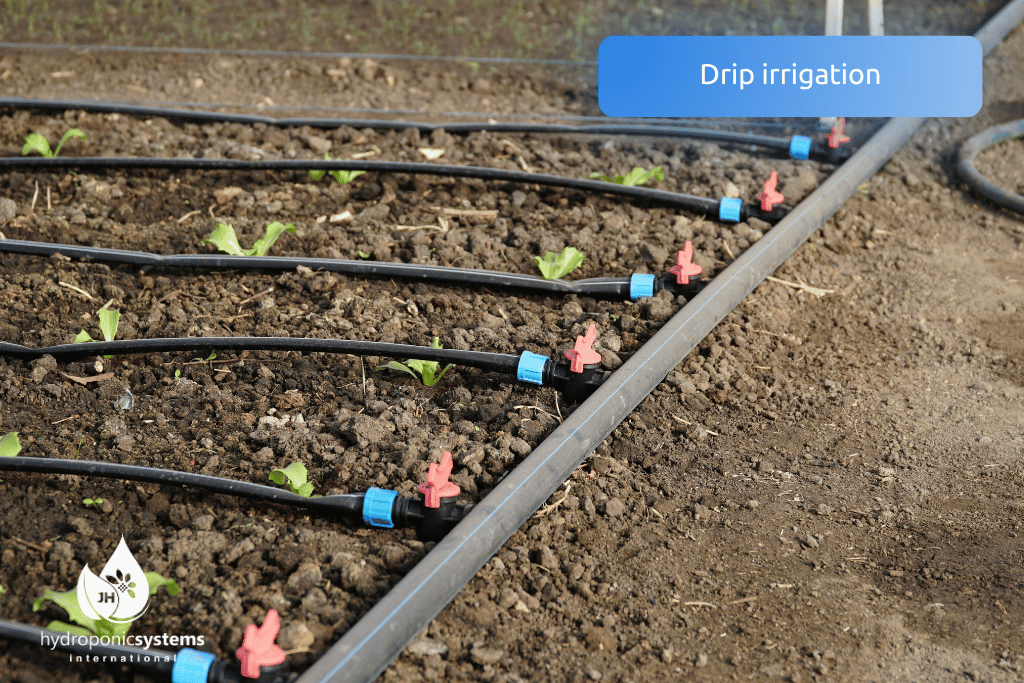
The chosen configuration therefore needs to work with the way you intend to manage:
- Drip irrigation.
- Fertigation.
- Drainage percentage and collection.
- EC and pH monitoring.
- Water reuse when applicable.
- Root-zone aeration.
- Treatment requirements in recirculating installations.
A system that is physically compatible with the crop and greenhouse can still create operational problems if its drainage or irrigation requirements do not fit the intended management strategy.
Consider how the system will be operated every day
Technical feasibility is only part of the decision. The installation also has to work for the people who plant, inspect, maintain and harvest the crop.
Access, working height and labour
Consider how workers will interact with the crop throughout the production cycle.
Working height can influence planting, crop inspection, pruning, harvesting and cleaning. Row spacing and system layout affect access, while the position of bags, pots or gutters can make routine tasks easier or more difficult.
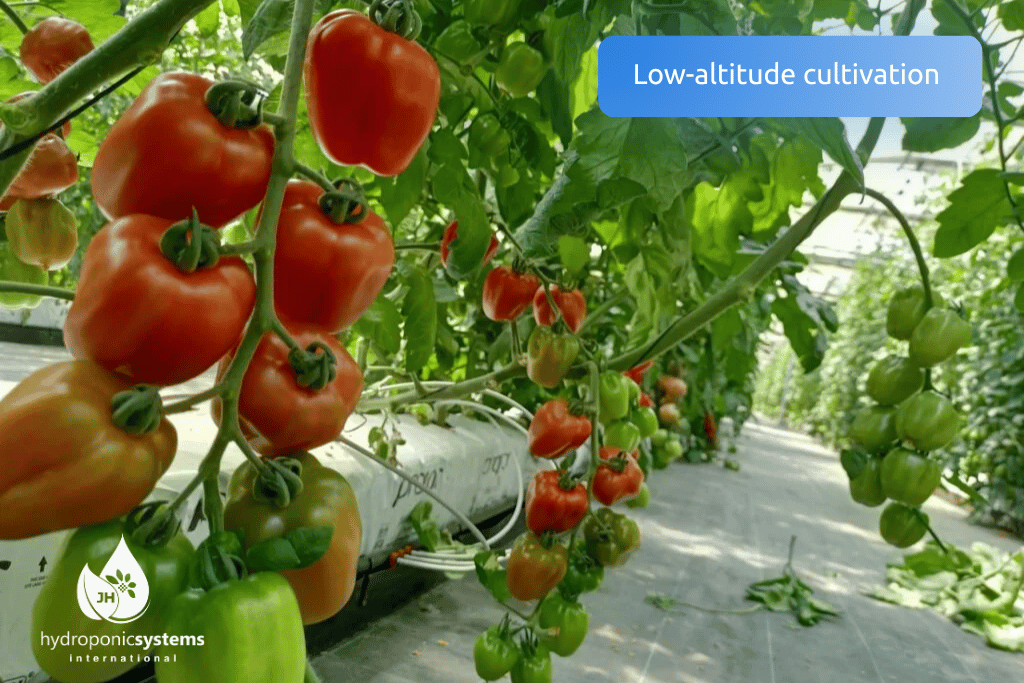
Instead of asking simply which configuration requires less labour, ask:
- At what height will the main crop tasks take place?
- Can workers reach the plants comfortably?
- Is there enough space for movement and equipment?
- Which operations will be carried out manually?
- How often will the crop need inspection or intervention?
- Does the layout facilitate harvesting and maintenance?
The answers depend on the crop and production model. They are more useful than a generic claim that one system always reduces labour.
Maintenance, monitoring and automation
Maintenance belongs in the initial comparison, not as a later operational detail.
Different configurations provide different levels of access to irrigation lines, drainage components, channels, emitters and other parts of the installation. If these components need regular inspection, cleaning or replacement, their accessibility affects day-to-day operation.
Automation can reduce or simplify certain tasks, but it does not correct a system that has been poorly designed. Before deciding what to automate, define what needs to be controlled and why.
The same principle applies to monitoring. A system that requires tighter control of water quality, nutrient solution or recirculation must match the technical capacity available within the operation.
These operational differences also have an economic impact: the initial installation cost is only one part of the decision. You also need to consider what the system will require during day-to-day operation.
Initial investment and operating costs: CAPEX vs OPEX
The economic comparison of a hydroponic system should not be reduced to its initial installation price. It is useful to separate CAPEX, the investment required to put the system in place, from OPEX, the costs associated with operating and maintaining it over time.
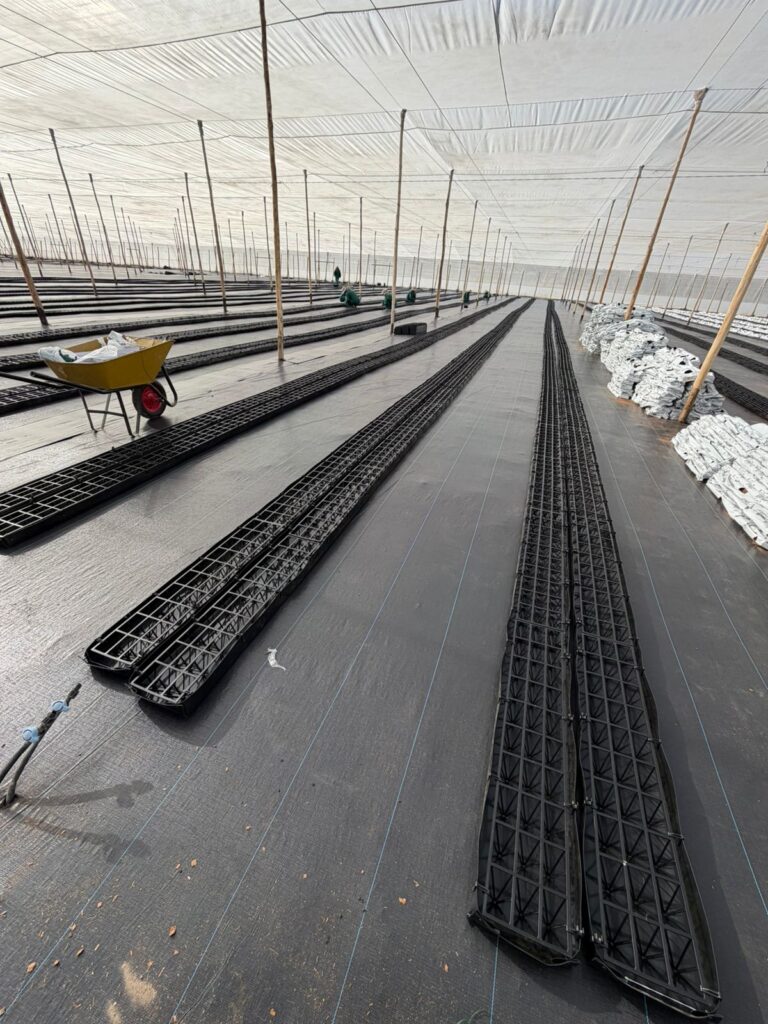
Where keeping the initial investment under control is a priority, soil-level solutions based on polypropylene gutters and Spacers may be worth evaluating. Our HS Eco System combines a gutter, Spacer Eco, clips and outflows and is designed as a cost-competitive alternative for crops grown in bags or slabs
When the priority is a professional elevated installation with a metal gutter, solutions such as HS Evolution System can be considered alongside Premium Elevated configurations.
A higher initial investment does not automatically mean a higher total cost, just as a lower initial investment does not guarantee the lowest operating cost. Durability, maintenance, labour, accessibility, drainage, structure and day-to-day management should be considered together.
Soil-level, elevated or hanging system: how to compare the viable options
Once crop requirements, greenhouse restrictions, irrigation, drainage, daily operation and the expected level of investment have been analysed, the comparison becomes much more useful.
At this point, you are no longer comparing every possible hydroponic system. You are comparing only the configurations that remain compatible with your project.
| Configuration | Crop and support considerations | Greenhouse requirements | Drainage and irrigation | Operational considerations | Check before choosing |
|---|---|---|---|---|---|
| Soil-level system | Must suit the crop, container and substrate arrangement. | Usually avoids the structural requirements of a suspended installation, but layout and floor conditions still matter. | Drainage routes and collection must be planned from the start. | Working position and access depend strongly on crop height and layout. | Confirm drainage, accessibility and compatibility with the production model. |
| Elevated system | Can raise bags, pots or gutters to a defined working height. | Requires appropriate support and enough usable greenhouse height. | Channels and drainage must maintain the required layout and slope. | Can change accessibility and the way routine tasks are performed. | Define working height, support, drainage and crop-management requirements together. |
| Hanging system | Relevant only when crop and support configuration are compatible. | Structural compatibility is essential because the installation relies on the greenhouse structure or a designed suspension system. | Drainage, slope and irrigation layout must work with the suspended configuration. | Can alter floor access and working height, but suitability depends on the project. | Verify structural loads and suspension design before making the final choice. |
When a soil-level system remains a viable option
A soil-level configuration can remain a sensible option when the crop and substrate arrangement work at that height and the production model does not require elevation.
Within this category, HS Eco System is worth evaluating for crops grown in bags or slabs where keeping the initial investment under control is a priority without giving up organised drainage management.
Where it is also important to keep the grow bag separated from the ground or drainage channel, a solution such as Spacer Premium can create that separation while supporting drainage and aeration.
Its apparent simplicity does not remove the need to plan drainage. Bags or containers still need to remain appropriately separated from unwanted moisture, and the route taken by drainage water must be controlled.
Evaluate accessibility as well. A configuration that requires frequent work at an uncomfortable height may be technically viable but less suitable for the intended operating mode.
When an elevated system makes sense
An elevated system deserves further consideration when raising the crop supports the required working height, drainage strategy or crop-management model.
The question is not whether elevation is better in itself, but what problem it solves in the specific installation.
Within our elevated systems, HS Evolution System uses a metal gutter and an elevated configuration designed to separate the grow bag from the drainage area and support efficient crop management.
Before selecting it, define:
- The required working height and support structure.
- The weight of the crop, substrate and containers.
- The irrigation layout and drainage route.
- Worker access to the crop.
- The maintenance requirements of the installation.
What to check before considering a hanging system
A hanging system should remain among the options only after the greenhouse has been confirmed as suitable for it.
For this type of installation, we offer HS Evolution Hanging System, a configuration designed to hang from the greenhouse structure and position the crop at a defined working height while maintaining the slope required for drainage collection.
Before moving further, check:
- Whether the greenhouse structure can support the planned installation.
- Where loads will be transferred.
- Available height.
- Suspension layout.
- Row spacing.
- Crop weight and support requirements.
- Irrigation and drainage routes.
- Access for maintenance.
- How the system will interact with other greenhouse equipment.
Structural assessment is project-specific. Without the corresponding technical information, the suitability of an existing greenhouse for hanging gutters cannot be confirmed. A qualified professional should verify the loads and suspension design for the specific project.
Which Hydroponic Systems solution best fits your project?
After filtering the available options by crop, structure, drainage, operation and investment, we can narrow down which solutions in our range are worth evaluating for each project.
| Need | Solution to evaluate |
| Bag-grown crops with a limited initial investment | HS Eco System |
| Keep the grow bag separated from drainage | Spacer Premium + gutter |
| Elevated crop system | HS Evolution System |
| Hanging installation | HS Evolution Hanging System |
| Strawberry production | HS Evolution Strawberry |
| Potted blueberry production | HS Hydropot System |
The final choice depends on the structural, agronomic, operational and economic conditions of the project. If you need to confirm which configuration is the best fit, contact our technical team before finalising the installation.
A practical checklist before choosing your hydroponic system
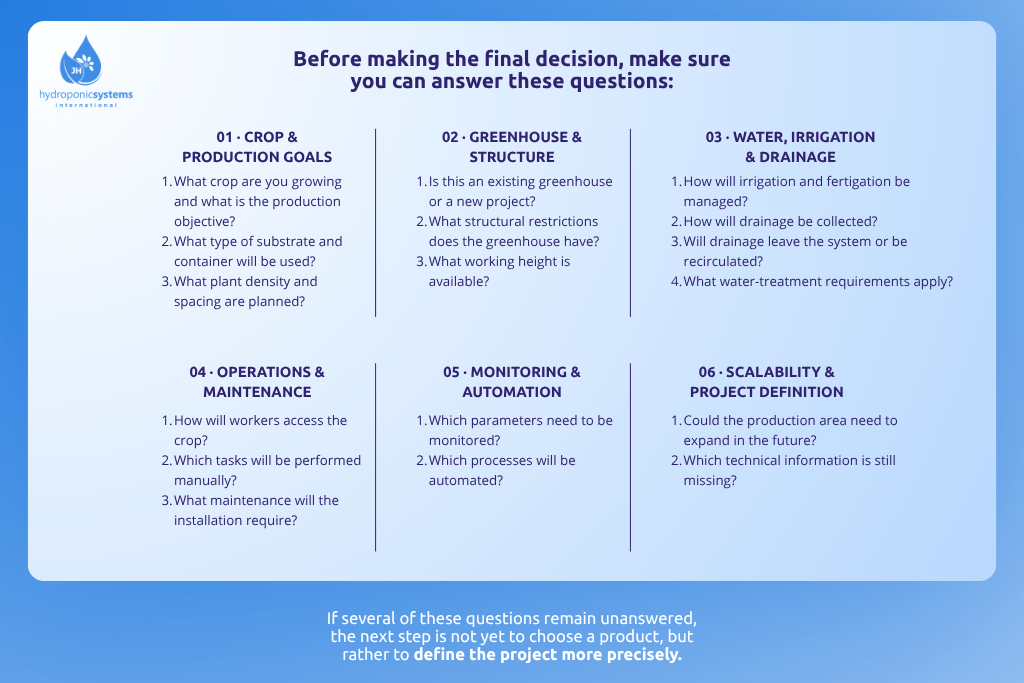
Request a quote for your hydroponic system
Once the crop, growing area, greenhouse type, drainage strategy and operating requirements have been defined, we can assess much more precisely which configuration the project requires.
Tell us what you plan to grow, the characteristics of your greenhouse and the requirements of the installation. We will review the available alternatives and prepare a proposal adapted to your project.
Frequently asked questions
What is the best hydroponic system for a commercial greenhouse?
There is no single best system for every commercial greenhouse. The right choice depends on the crop, greenhouse structure, substrate, irrigation and drainage strategy, expected investment, working height, maintenance requirements and operating model. Start by eliminating systems that do not meet those conditions before comparing the remaining options
Can the same hydroponic system be used for different crops?
Yes, some hydroponic systems can be used with different crops, but their configuration may need to change. Root-zone requirements, plant support, substrate, density, irrigation and crop management should all be considered before assuming the same setup will work equally well.
How does greenhouse structure affect the hydroponic system I can use?
The structure can determine available working height, layout, support points and whether suspended equipment is feasible. Hanging systems require project-specific verification of structural compatibility rather than assuming that sufficient greenhouse height is enough.
Is a hanging hydroponic system always better than an elevated or soil-level system?
No. Hanging, elevated and soil-level systems solve different constraints. The most suitable configuration depends on the crop, greenhouse, drainage strategy and way the operation will be managed.
Should drainage be planned before choosing the system?
Yes. Drainage affects the physical layout, channels or containers, slope, collection system and possible recirculation of nutrient solution. It should be considered during system selection rather than added as a correction after the installation has been defined.