In professional agriculture, some technical decisions go unnoticed from outside the greenhouse, yet completely transform production methods within.
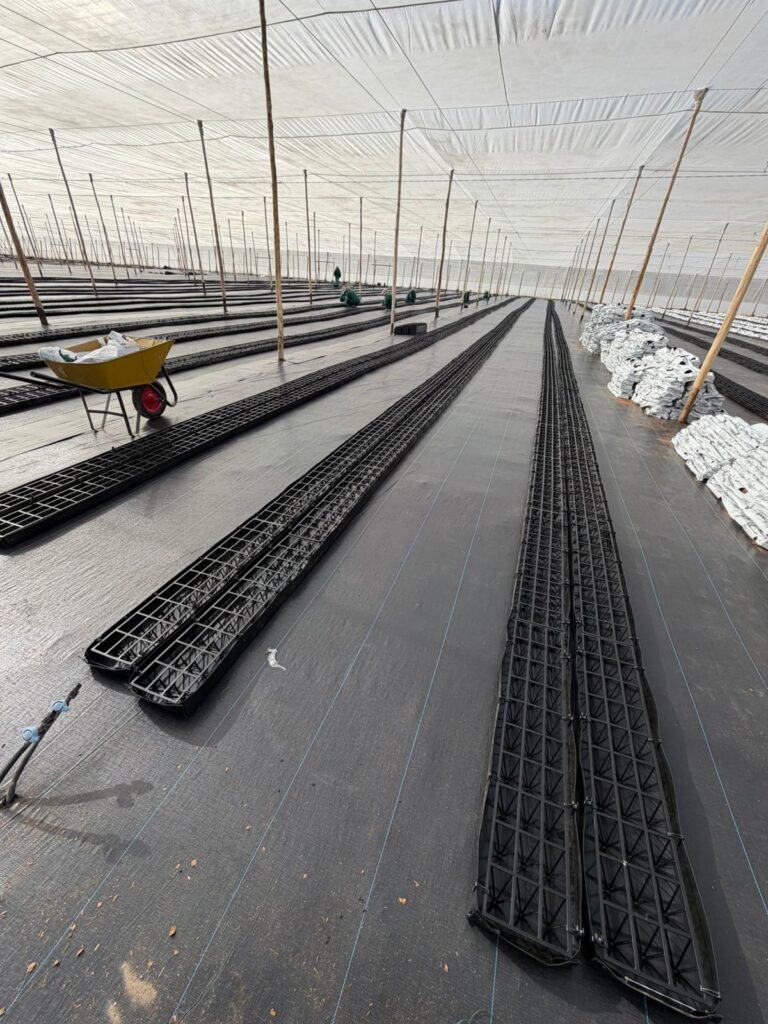
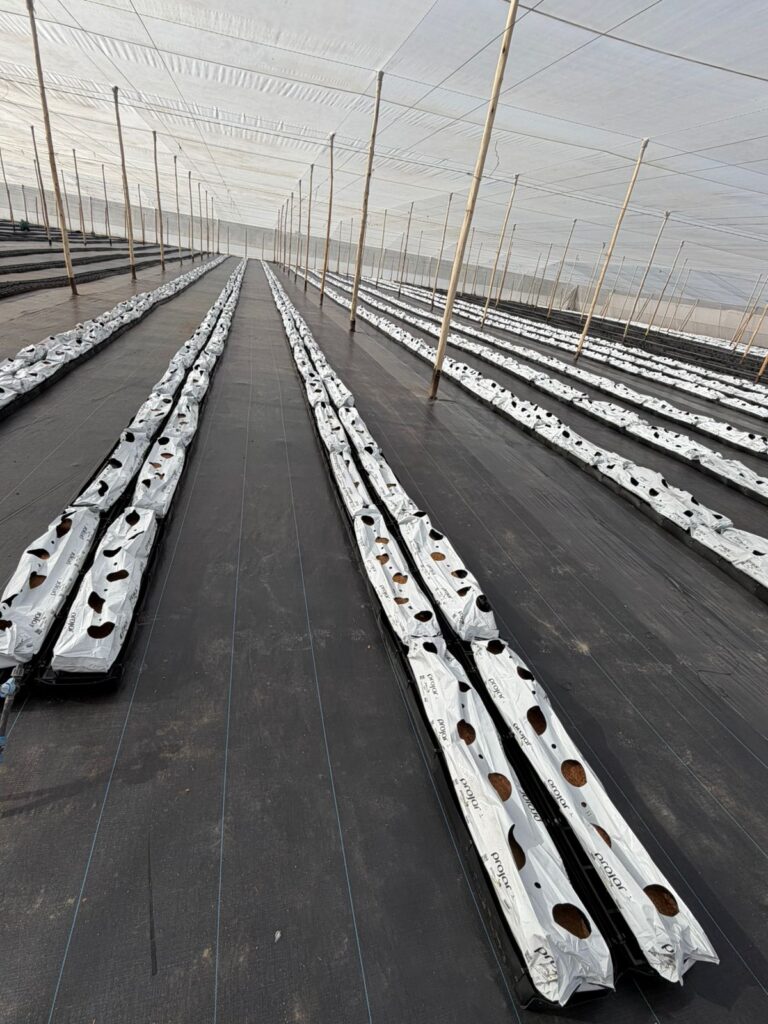
This is the case for a major seed company in South America, which has incorporated 8,000 linear meters of Hydroponic Systems’ ECO system, equipped with a spacer and drainage collection channel. The installation, developed within a greenhouse, represents a clear commitment to a more organized, controllable, and better-prepared cultivation method, better suited to meet the demands of modern agricultural production.
Hydroponics is often associated with large investments, tall structures, or high-tech facilities. However, one of its greatest advantages is that it can also be implemented affordably and gradually. For many growers, the transition doesn’t have to begin with a complex system. It can start with a solution capable of separating the crop from the soil, collecting drainage, and improving the root environment without completely transforming the existing infrastructure.
This is precisely the logic behind the ECO system.
A Practical Entry into Hydroponic Cultivation
The ECO system allows for substrate cultivation using a simple and functional solution, designed for growers who need to improve drainage management without the upfront investment of a complex system. The plant develops in a more controlled environment, with a technical base that facilitates separation from the soil, drainage, and cleaner operation of the facility.
In protected cultivation, this change has strategic value. The soil ceases to be a passive surface and becomes a factor that can affect root health, moisture levels, irrigation uniformity, and overall greenhouse cleanliness. When cultivation is organized around defined channels and drains, the grower gains greater control over observation and management.
In a seed company, where precision, traceability, and crop uniformity are paramount, this control is even more crucial.
The role of the Spacer: aeration, separation and root
One of the key elements of the system is the Spacer, a component designed to separate the substrate from the drainage collection area. Its function may seem simple, but its agronomic effect is significant.
When the substrate bag or container remains in direct contact with a damp surface, the root environment operates under less favorable conditions. Moisture can accumulate beneath the substrate, reducing aeration and increasing pressure on the roots, especially in long cycles or crops with frequent irrigation.
The Spacer creates an air chamber beneath the substrate. This separation helps reduce accumulated moisture, improves ventilation in the lower zone, and prevents direct contact between the substrate and the drainage. In practice, this promotes more balanced root development and a cleaner system.
In hydroponics, the root system is not a secondary detail. It is the point where much of the crop’s efficiency is determined. A better-aerated root system, less exposed to persistent moisture, can function more consistently, absorb water and nutrients more efficiently, and respond more uniformly to the fertigation strategy.
Drainage Collection Channel: The First Step Towards Recirculation
The installed system incorporates a drainage collection channel, an essential component for growers seeking to move towards more efficient agriculture.
Collecting drainage is not just a matter of tidiness. It’s a technical decision that allows for measuring, channeling, and, when the project requires it, preparing the drained water for reuse. In an agricultural context marked by the need to save water, reduce losses, and improve the precision of fertigation, drainage management has become critical.
Without a channel, drainage is lost, dispersed, or creates damp areas within the greenhouse. With proper channeling, growers can better control what happens after irrigation. They can reduce moisture buildup, maintain a cleaner facility, and open the door to recirculation strategies.
Drainage recirculation allows for the recovery of some of the water and fertilizers that haven’t been absorbed by the plants. To achieve this, the system must be well-designed from the ground up: collection, channeling, filtration, analysis, and, if necessary, disinfection. The gutter is the first step in that chain.
More Control Without Overspending
One of the great strengths of the ECO system is that it addresses a very common need in protected cultivation: improved technical management without excessive investment.
Not all projects need to start with raised channels or more complex structures. In many cases, growers are looking for a robust, economical, and versatile solution that allows them to transition to hydroponics with a reasonable investment. The ECO system fits precisely into this need.
It allows for better crop organization, drainage collection, reduced soil contact, improved root environment, and more professional management of the system. All this with a solution designed for substrate-based cultivation and adaptable to different horticultural species.
For a seed company, this type of system also offers an added advantage: it helps maintain more homogeneous conditions between crop rows, which is essential when working with trials, specialized production, or high-value plant materials.
Hydroponics as an Efficiency Tool
Hydroponic cultivation should not be understood merely as a technological trend. In many cases, it is a practical solution to specific problems: lack of uniformity, drainage issues, excess humidity, difficulty cleaning the system, or the need for more precise production.
By separating the crop from the soil and working with substrates, defined drainage systems, and controlled fertigation, growers can make more informed decisions. They can adjust irrigation, analyze drainage patterns, improve root oxygenation, and reduce losses in the system.
Hydroponics does not eliminate agricultural complexity, but it allows for better management.
The case of this seed company in South America demonstrates how a seemingly simple solution can have a significant impact on production methods. The 8,000 linear meters of ECO system installed are not just cultivation infrastructure. They are a technical foundation for moving toward a cleaner, more efficient greenhouse, better equipped to utilize water and nutrients.
Hydroponic Systems continues to develop solutions designed for growers who need to improve their cultivation systems without losing sight of profitability. The ECO system with Spacer and drainage channel demonstrates that access to hydroponics can be practical, scalable, and technically sound from the very first meter installed.