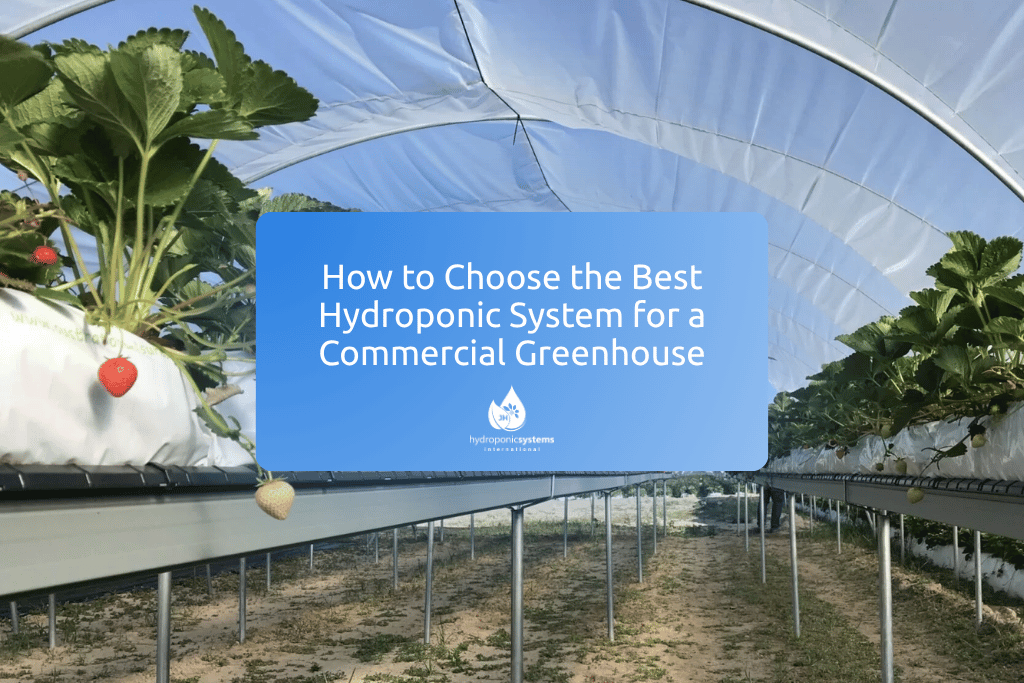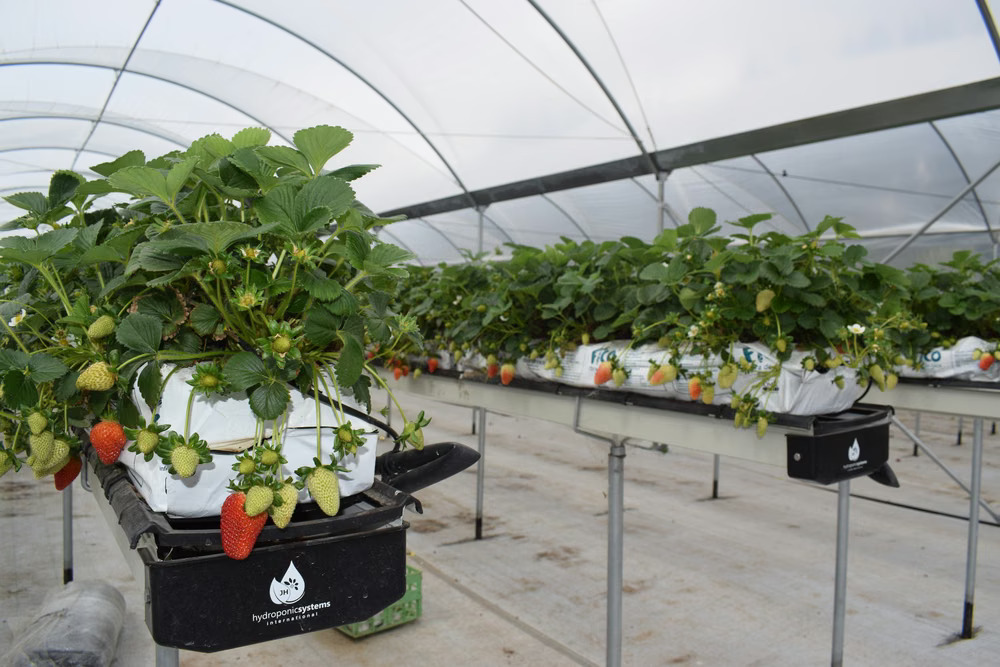
A Uruguayan farm is transforming its strawberry production by using hydroponic cultivation within macro-tunnels. The metal gutters from Hydroponic Systems—supplied via Aguas Uruguay—are part of a model designed to improve drainage, protect roots, and make more efficient use of the productive surface area.
In Uruguay, Ana Laura and Víctor have demonstrated that transforming a traditional farm into a professional hydroponic operation can open up new commercial opportunities. Their business currently grows around 64,000 strawberry plants, distributed across 15 macro-tunnels on one hectare of land.
Their experience was recently featured in the Uruguayan newspaper El Observador. The interview describes the growth of the farming operation, the year-round marketing of strawberries, and the role played by Aguas Uruguay in modernizing their facilities.
Behind this transformation lies a key decision: replacing traditional soil-based cultivation with an elevated system that uses a growing medium, controlled irrigation, and an organized drainage-water collection process.
The challenge of growing strawberries in soil: surface area, moisture, and labor
Traditional strawberry cultivation requires numerous tasks to be performed close to the ground. The preparation of planting beds, the maintenance of the crop, the management of moisture levels, and the harvesting process all dictate the efficiency of the operation.
For Ana Laura and Víctor, the shift toward hydroponics was also driven by the need to make better use of their land and to maintain a more stable commercial output.
Their initial attempts, using simple structures, proved inadequate in the face of local weather conditions. Guidance from Aguas Uruguay helped them transition to a professional-grade setup, featuring macro-tunnels, coconut coir as a growing medium, and automated irrigation control.
This new configuration allows for approximately 64,000 plants to be grown per hectare. As the producers explain in the interview, accommodating an equivalent number of plants using their traditional open-field system would require at least three times as much land.
Metal gutters for strawberries: why controlling drainage is so important
In a hydroponic strawberry cultivation system, irrigation water that passes through the substrate must be effectively drained away from the growing area. If this drainage accumulates beneath the grow bags, it can create persistent moisture around the roots and compromise the hygienic conditions of the facility.
This issue is particularly significant in long cultivation rows with frequent irrigation cycles and high plant density. A well-designed drainage gutter should collect the leachate and direct it toward a designated discharge or collection point, preventing unnecessary accumulation beneath the substrate.
This is where the metal gutter technology from Hydroponic Systems—used in professional hydroponic projects and distributed in Uruguay by Aguas Uruguay—comes into play.
Its purpose is to provide a durable, continuous channel for collecting excess nutrient solution. The system’s design allows for the establishment of an appropriate slope, which facilitates the flow of drainage, keeps the workspace cleaner, and improves the management of water from each cultivation row.
This level of control also facilitates the integration of collection, treatment, or recirculation systems, provided the project is equipped with the necessary infrastructure.Este control también facilita la incorporación de sistemas de recogida, tratamiento o recirculación, cuando el proyecto dispone de los equipos necesarios.
Spacer: separating roots from drained water to improve root health
Collecting drainage is essential, but the positioning of the substrate bag in relation to the water flowing through the gutter is equally important.
For this reason, Hydroponic Systems’ elevated metal systems can incorporate a “Spacer”—a component designed to keep the bag separated from the drainage area and promote air circulation beneath the substrate.
This physical separation is particularly beneficial for strawberry cultivation. As the crop cycle progresses, roots may grow out through the openings in the bag. If they encounter a surface that remains constantly damp or come into contact with drainage water, they may be exposed to conditions that are less than ideal for their development.
By combining a metal gutter with a Spacer, the system ensures that the root zone remains distinct from the area where leachate flows. This facilitates aeration beneath the substrate and minimizes direct contact between the roots and accumulated moisture.
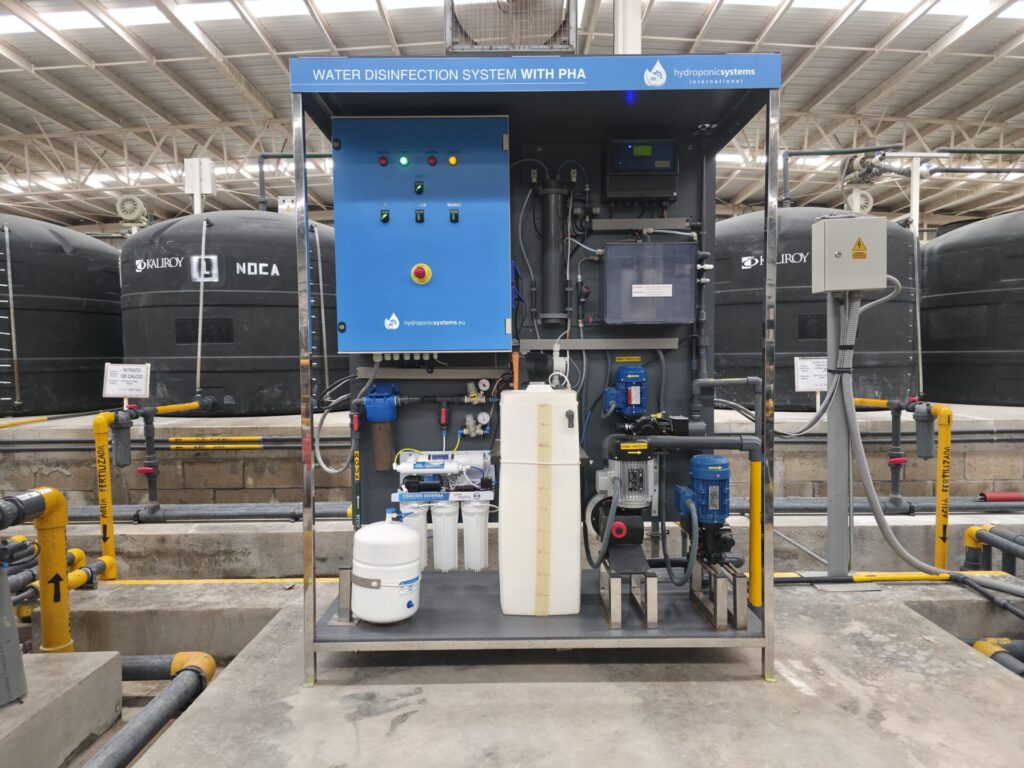
While this solution can help reduce certain risk factors associated with root diseases, it does not replace the need for water disinfection, phytosanitary control, or proper fertigation management.
The quality of a hydroponic installation depends as much on crop management as it does on the system’s ability to provide suitable physical conditions throughout the entire growing season.
HS Evolution Strawberry: a metal system designed for the hydroponic cultivation of strawberries
Hydroponic Systems manufactures elevated metal gutter systems specifically developed for growing strawberries in substrate, such as the HS Evolution Strawberry system.
This system consists of a coated steel gutter, support components, drainage outlets, and a spacer that elevates the grow bag. This configuration allows for an optimal working height and enables precise control over the slope required for water drainage.
One of its key advantages is its installation versatility. It can be used in multi-span greenhouses, macro-tunnels, and other agricultural protective structures—whether for new projects or, in certain cases, for existing facilities.
The elevated structure also simplifies daily tasks. Workers can access the plants and harvest strawberries without having to remain in a stooped position, while the cultivation lines are kept neatly organized.
For commercial operations, this combination of structural strength, effective drainage, and ergonomics addresses several critical aspects of the production process simultaneously.
The results: an operation capable of marketing strawberries year-round
One of the most interesting aspects of Ana Laura and Víctor’s account is the shift in their production schedule.
Under their previous traditional cultivation method, sales were concentrated primarily between October and January. With the new hydroponic setup, they now produce strawberries year-round, though yields vary depending on temperatures and seasonal conditions.
They have also managed to significantly expand their production capacity. From an initial phase involving about 10,000 plants, they have grown to an operation with approximately 64,000 plants, following a model of progressive expansion.
Their produce is supplied on a weekly basis to the supermarket chain Tienda Inglesa. The growers also highlight improvements in working conditions, the cleanliness of the system, and the commercial presentation of the fruit.
These results stem from a combination of several factors: protective structures, plant genetics, growing substrate, fertigation, agronomic management, and the cultivation system itself. Within this framework, the controlled collection of drainage water plays a crucial technical role.
Experience shows that modernizing a strawberry operation does not depend on any single element, but rather on the integration of solutions that function effectively throughout the entire production cycle.
Aguas Uruguay and Hydroponic Systems: European technology combined with local agricultural expertise
The transformation of Hidroponía CaPei also highlights the importance of working with a supplier that understands the country’s specific production conditions.
Aguas Uruguay, a company focused on the development of professional hydroponic projects, has supported these producers from their very first investment decisions. Their involvement has included supplying equipment and coordinating specialized agronomic consulting.
The commercial and technological partnership between Aguas Uruguay and Hydroponic Systems brings European-manufactured solutions to Uruguayan producers, blending industrial-grade cultivation systems with a deep understanding of local agricultural needs.
For a grower, having a system that is correctly selected and installed is just as important as the quality of the materials themselves. Factors such as dimensions, slopes, line layout, and drainage management must be tailored to each individual operation.
Can these benefits be achieved in other strawberry greenhouses?
The Uruguayan case demonstrates the potential of a professional hydroponic installation, though every project requires a specific assessment.
An operation already using substrate bags could improve its drainage collection system by incorporating appropriate gutters. A producer currently growing in the soil might consider a full transition to elevated cultivation lines. In either case, it is essential to properly define the system based on the crop variety, planting density, line length, and the specific characteristics of the greenhouse.
Hydroponic Systems manufactures elevated metal gutter systems for the professional cultivation of strawberries and other crops. Their solutions are designed to help growers collect drainage, improve aeration beneath the substrate, and keep roots separate from the discharged water.
Are you planning a new hydroponic strawberry cultivation project, or do you need to improve the drainage in your existing facility?
Explore the features of the HS Evolution Strawberry metal gutter system and request technical information or a quote tailored to your growing area, crop, and country.
Hydroponic Systems: European manufacturer of cultivation and drainage collection systems for professional greenhouses.