Degraded or low-quality soils limit agricultural production, but do not have to be an obstacle to achieving profitable and sustainable crops. In this article, we explore the limitations of poor soils, traditional options to improve them and how soilless cultivation presents itself as an innovative and practical solution, allowing farmers to maximize productivity even in adverse conditions.
The challenge of growing in poor soils
In cases where cultivation is viable, the characteristics of these soils hinder plant growth, reduce agricultural yields and increase production costs due to the need for greater quantities of inputs, such as fertilizers and water.
What is poor soil and how does it affect the crop?
Poor soil is one that lacks the properties necessary to support optimal plant growth. This can be due to multiple factors, such as:
- Low fertility: Lack of essential nutrients such as nitrogen, phosphorus or potassium, essential for the development of plants.
- Compaction: An overly dense soil structure that limits root penetration and reduces air and water exchange.
- Extreme salinity or acidity: Unfavorable chemical conditions that make it difficult for roots to absorb nutrients.
- Poor water retention: Inability of the soil to store sufficient water, which requires constant irrigation and increases the risk of water stress in plants.
Main limitations of degraded or unsuitable soils for agriculture
- Soil erosion: The constant loss of topsoil due to wind or rain reduces its ability to retain nutrients and water, leaving an unviable growing base.
- Lack of organic matter: Poor soils lack organic matter, essential to improve their structure and provide long-term nutrients.
- pH imbalances: Many degraded soils are too acidic or alkaline, which affects the availability of essential nutrients for plants.
- Pollution: In some cases, soils may be contaminated with heavy metals or other chemicals, making them unusable for traditional cultivation.

Examples of regions with poor soils and their impact on agricultural production
There are numerous regions in the world where poor soils represent a great challenge for agriculture:
- Arid and semi-arid areas: Regions like the southwestern United States face problems with salinity and low water retention.
- Land degraded by intensive agriculture: In intensively farmed areas, such as certain regions of Latin America, soil fertility has decreased due to excessive use of fertilizers and pesticides.
- tropical soils: In tropical regions, such as some parts of Africa, soils are acidic and low in fertility, making sustainable agricultural production difficult.
Growing in these conditions requires efficient solutions to overcome the barriers that poor soils present. In the next section, we will explain methods to address this challenge and ensure productive crops even in the most difficult terrain.
Traditional methods to improve poor soils
Over the years, farmers have used various traditional methods to try to improve the quality of poor soils and make them more productive. Although these methods are not always sufficient on extremely degraded soils, they can be useful in certain situations and, in many cases, are the first step towards more sustainable agriculture.
Use of organic fertilizers
One of the most common practices is the incorporation of organic fertilizers into the soil, such as compost, manure and plant residues. These fertilizers provide essential nutrients such as nitrogen, phosphorus and potassium, improve soil structure, increase water retention and promote microbiological activity.
But in highly degraded soils, organic fertilizers may not be enough to restore soil quality.
Crop rotation and cover crop
Crop rotation consists of alternating different types of plants in the same plot throughout the seasons. This helps reduce erosion, improve soil structure and break pest and disease cycles. On the other hand, cover cropping involves planting specific species, such as legumes, that protect the soil between main crop cycles.
Likewise, they do not always generate immediate results in highly degraded soils.
Use of conservative tillage techniques
Conservative tillage is a practice that minimizes soil disturbance, leaving residue from previous crops on the surface. This protects the soil against erosion, improves water retention and promotes biological activity.
The drawback is that it may not be sufficient in compacted soils or with major chemical deficiencies.
Application of pH correctors
For soils with pH imbalances, such as those that are too acidic or alkaline, applying correctors can be an effective solution. Improves the availability of nutrients for plants.
It requires constant soil testing and regular applications to maintain balance.
Limitations of traditional methods in extremely degraded soils
Although these methods can improve certain aspects of the soil, their effectiveness is limited on extremely degraded soils or with severe structural problems. In these situations, it is necessary to consider more advanced solutions, such as soilless cultivation, to overcome the challenges more efficiently and ensure productive crops.
Soilless cultivation: An innovative solution for poor soils
Soilless cultivation has established itself as one of the most effective and sustainable solutions to overcome the limitations of poor soils. This method eliminates dependence on traditional soil, allowing farmers to completely control plant growing conditions and optimize resource use. Its effectiveness lies in the ability to provide plants with exactly what they need, regardless of the quality of the available soil.

What is soilless farming and how does it work?
Soilless cultivation is an agricultural technique in which plants are developed in an alternative medium to soil, such as inert substrates (coconut fiber, perlite, rock wool, among others), and receive essential nutrients through a nutrient solution. controlled. This approach not only ensures a constant supply of water and nutrients, but also allows space to be optimized and prevent problems associated with soil quality, such as compaction, salinity or contamination.
Advantages of soilless cultivation compared to traditional methods
- Soil independence: By doing away with soil, problems related to fertility, pH or contamination are completely eliminated.
- Efficient use of water: Soilless growing systems use less water than traditional methods, as they recycle and reuse excess water.
- Total nutrient control: Allows you to precisely adjust nutrient concentrations according to the specific needs of each crop, maximizing yield.
- Prevention of soil diseases: By not being in contact with the soil, plants are protected against common pathogens that affect the roots.
- Production in limited spaces: Ideal for areas with poor soils or regions with extreme weather conditions.
Applications of soilless cultivation in areas with adverse conditions
Soilless farming is especially useful in regions with poor soils, as it offers a viable and sustainable solution for producing food in conditions where traditional methods would fail. For example:
- Arid or semi-arid areas: In these areas, soilless cultivation allows efficient use of water, maximizing production with limited resources.
- Saline or contaminated soils: Eliminates the need for expensive soil reclamation treatments.
- Urban or industrial land: Allows cultivation in areas where space is limited and the quality of the soil is not suitable for agriculture.
Our approach: The substrate growing system with Hydroponic Systems
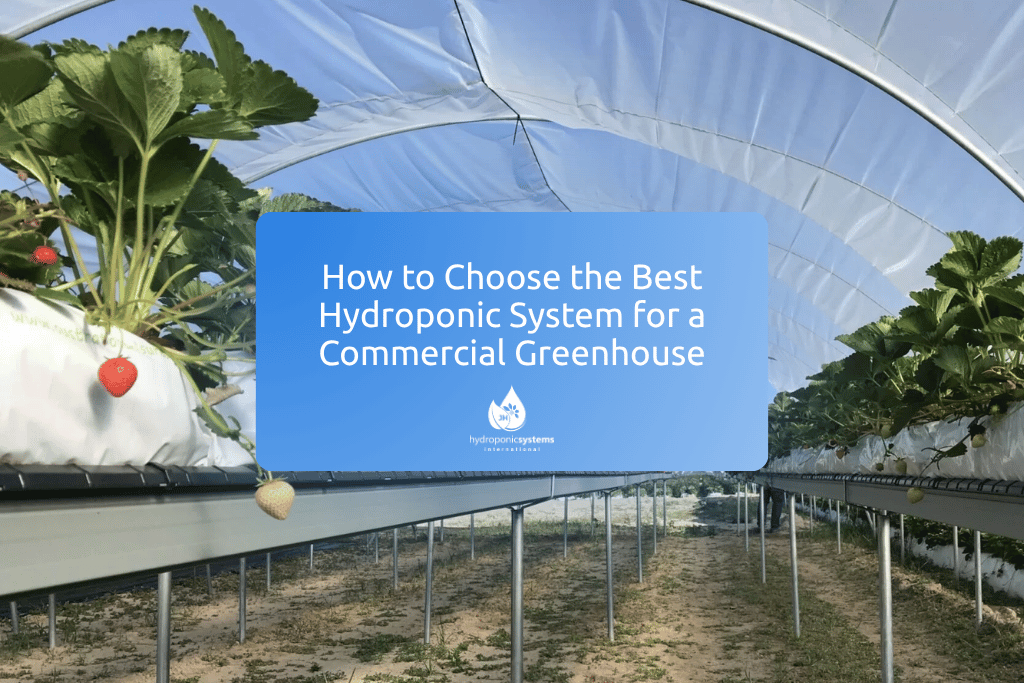
In Hydroponic Systems, we have developed a system that optimizes soilless cultivation to overcome the limitations of poor soils. Our system uses growbags placed on spacers, designed to maximize efficiency in water and nutrient management:
- Total root isolation: Growbags prevent root contact with poor soil, providing a controlled and healthy environment for their development.
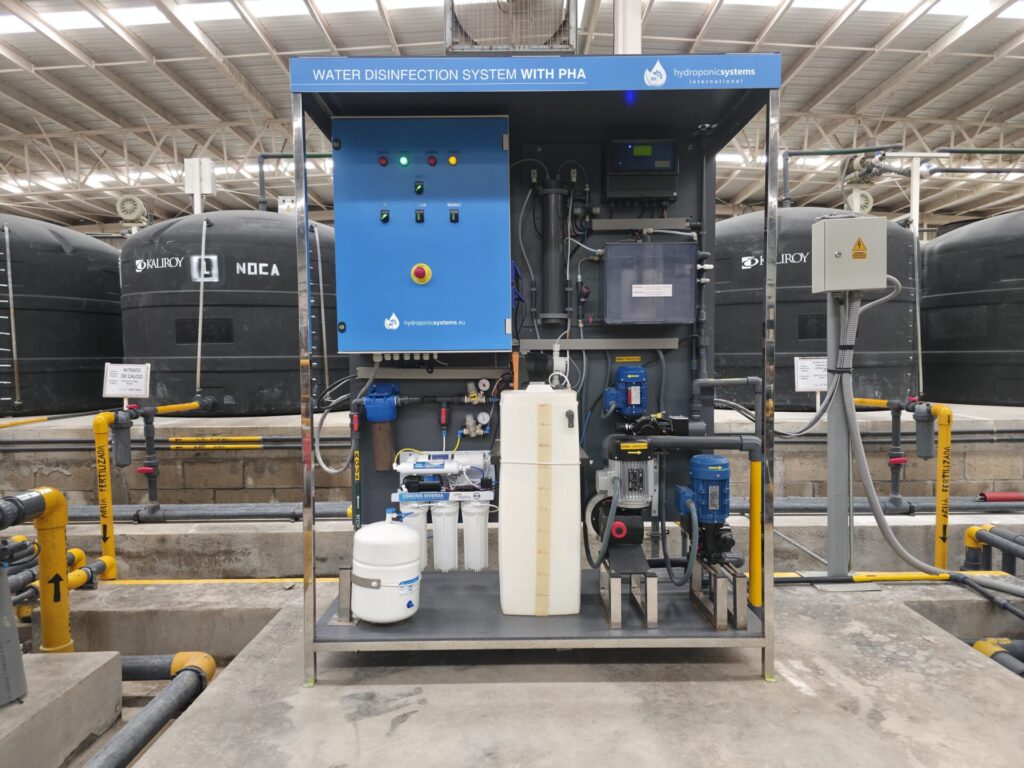
- Drainage and reuse of water: Spacers allow excess irrigation and fertilizers to fall into a gutter, where they are collected, disinfected and reused. This significantly reduces water consumption and minimizes waste.
- Optimal aeration: The design of the spacers encourages air circulation around the roots, preventing water logging and root diseases.
The crop redefines what is possible in agriculture, allowing farmers to produce efficiently and sustainably in areas where it was previously unthinkable.
What crops are ideal for the growbag system?
The growbag growing system is highly versatile and adapts to a wide variety of crops. Its ability to provide a controlled environment, with efficient water and nutrient management, makes it an ideal option for crops that require specific conditions or that are sensitive to the limitations of traditional soil.
1. Horticultural crops
Horticultural crops are especially suitable for this system due to their high demand for water and nutrients, as well as their sensitivity to soil diseases:
- Tomatoes: Being a high-yielding crop, tomatoes thrive in growbags, where roots can develop without restrictions and with a constant supply of nutrients.
- Peppers: They usually need a well-aerated and controlled environment, which makes them ideal for this system.
- Cucumbers: Thanks to their rapid growth and need for constant watering, cucumbers benefit greatly from the precise management of water and nutrients that they offer.
- Zucchini: This crop requires a well-aerated substrate and precise irrigation control, which is easily achieved with this system.
2. Fruits with high commercial value
Small fruits in high demand in the market find growing in growbags an ideal environment to maximize their production and quality:
- Blueberries: These fruits require an acidic pH and precise humidity control, conditions that are easy to maintain in this system.
- Strawberries: Sensitive to excess water and soil diseases, strawberries grow perfectly in growbags, where these risks are minimized.
- Raspberries and blackberries: These berries need efficient drainage and a constant supply of water and nutrients, conditions that the system ensures.
3. Ornamental plants and flowers
The system is also widely used in the cultivation of ornamental plants and flowers, which are usually more sensitive to soil conditions. Common examples include:
Roses: They benefit from precise nutrient control to maintain the quality of the flowers.
- Orchids: These epiphytic plants thrive in specific substrates that ensure good drainage and constant humidity.
- Chrysanthemums and geraniums: They need a controlled environment for abundant and long-lasting flowering.
4. Experimental or specialized crops
The growbag system is also ideal for innovative crops or crops with specific needs, such as aromatic herbs (basil, mint) or exotic crops (pitahaya, passion fruit), which require absolute control of growing conditions.
Growing in growbags has established itself as an innovative and efficient solution to overcome the challenges of poor soils, ensuring sustainable production, even in the most adverse conditions.
If you are looking for a reliable and effective alternative to maximize the productivity of your crops, in Hydroponic Systems we are one of the older hydroponic suppliers globally. Our system optimizes crop performance, contributing to the sustainability and profitability of your agricultural operation.
Contact us and discover how we can help you transform the challenges of poor soils into opportunities for agricultural success.