A commercial farming operation in Mexico has reported a reduction in biofilm levels within its irrigation pipes and drippers following the installation of an automated, on-site pure hypochlorous acid generation system for continuous irrigation water treatment.
The technology, supplied by Hydroponic Systems, has already been introduced into the Mexican market as a solution for improving the microbiological quality of irrigation water and addressing one of the most persistent challenges in intensive crop production: biofilm accumulation and the resulting clogging of irrigation pipes, filters, drippers and irrigation stakes. The system also provides disinfectant activity against microorganisms such as Fusarium, Pythium, Phytophthora, Clavibacter and E. coli.
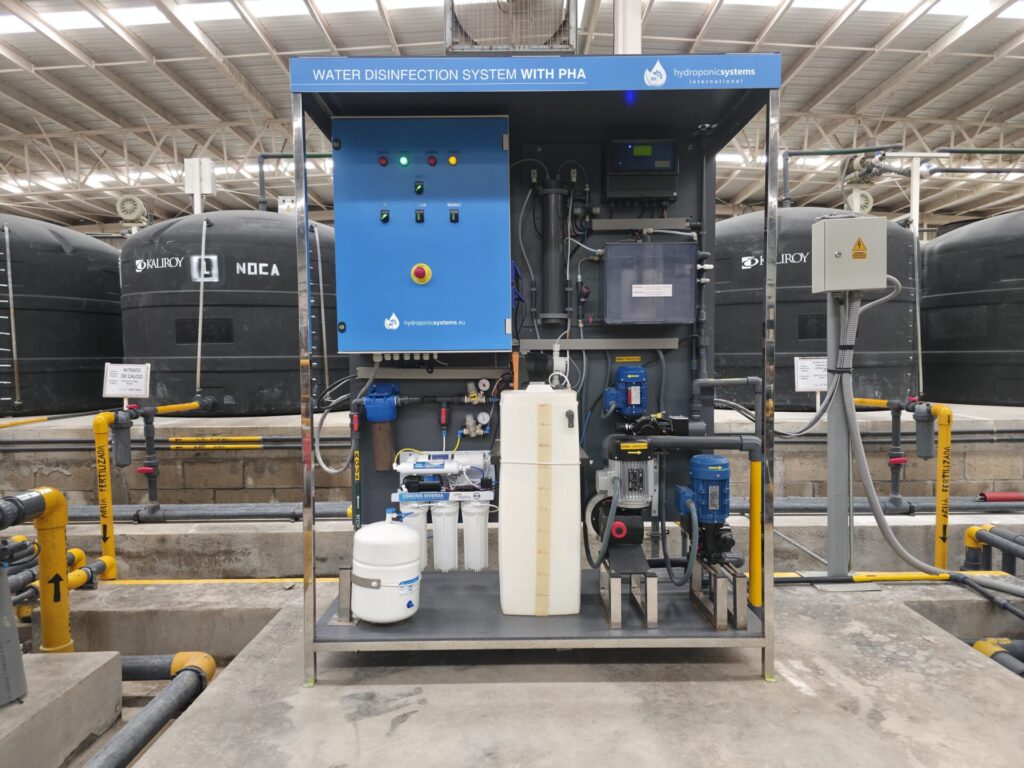
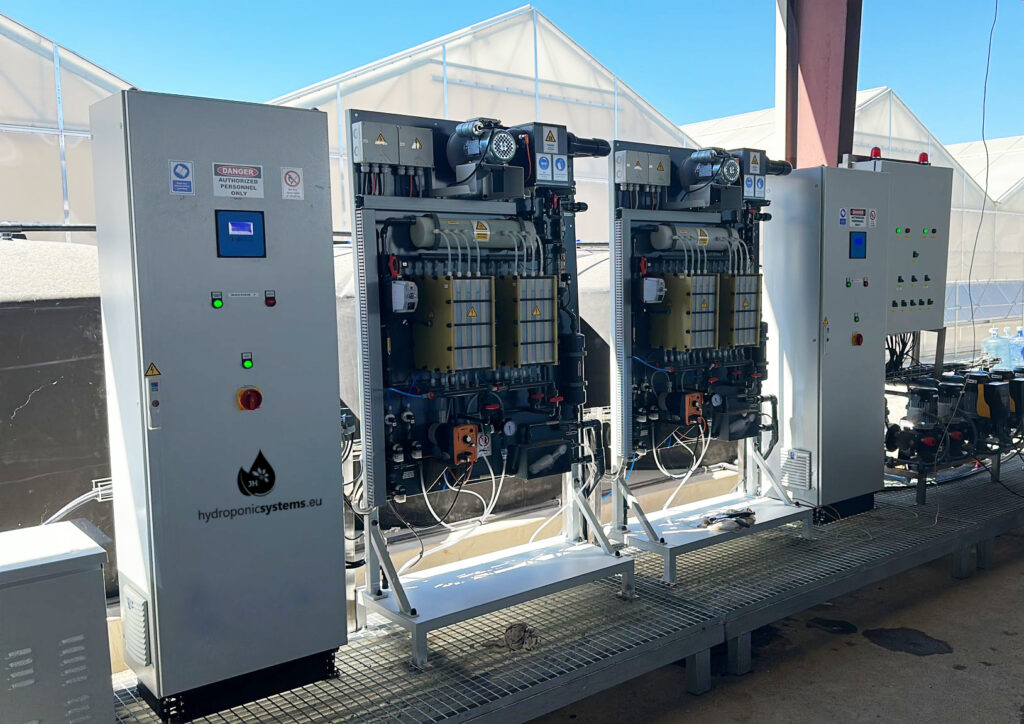
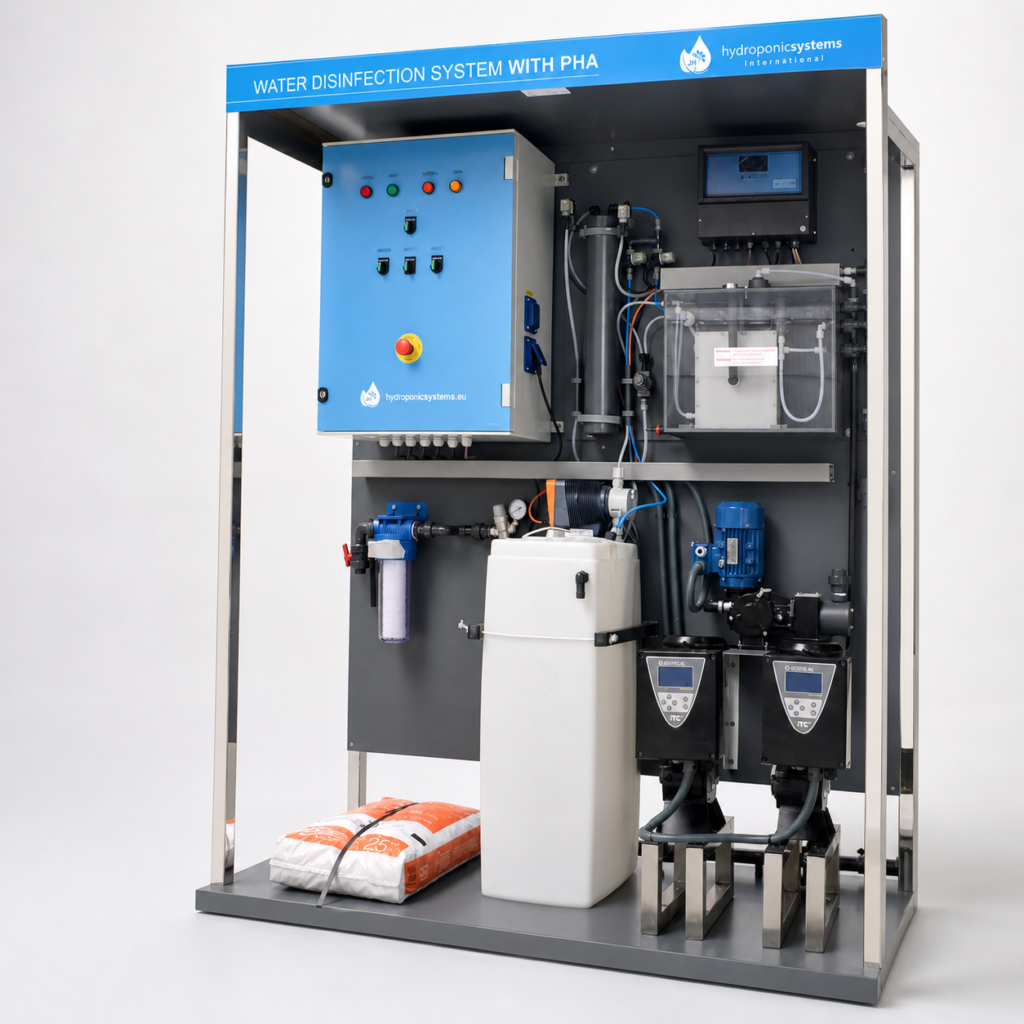
The system generates PHA (pure hypochlorous acid) directly at the agricultural facility and can operate automatically, 24 hours a day. Treatment is introduced at the irrigation head unit, allowing growers to implement a preventive approach as part of their normal irrigation operations.
One of its most significant features is continuous disinfection throughout the irrigation network. Unlike systems that rely on periodic disinfection cycles, PHA is continuously dosed into the irrigation water, allowing the disinfectant to circulate through the entire hydraulic network, including pipes, irrigation stakes, drippers, drainage gutters, drains and filters. As the treated water moves through the system, it continuously acts on internal surfaces, progressively breaking down and removing biofilm, including deposits that have already become established.
Trials conducted at the same agricultural operation have also extended to other aspects of crop production and farm hygiene. PHA was evaluated for disinfecting seedling propagation trays and compared with three alternative treatments. In this phytopathological trial, hypochlorous acid at a concentration of 1,150 ppm achieved the best overall performance among the treatments evaluated for disinfecting seedling trays and metal greenhouse structures, reducing phytopathogenic fungi and the overall microbial load.
Additional disinfection trials have been carried out on tools and equipment used inside the greenhouse, while assessments of foliar applications and postharvest disinfection are still ongoing.
The problem often starts upstream of the dripper
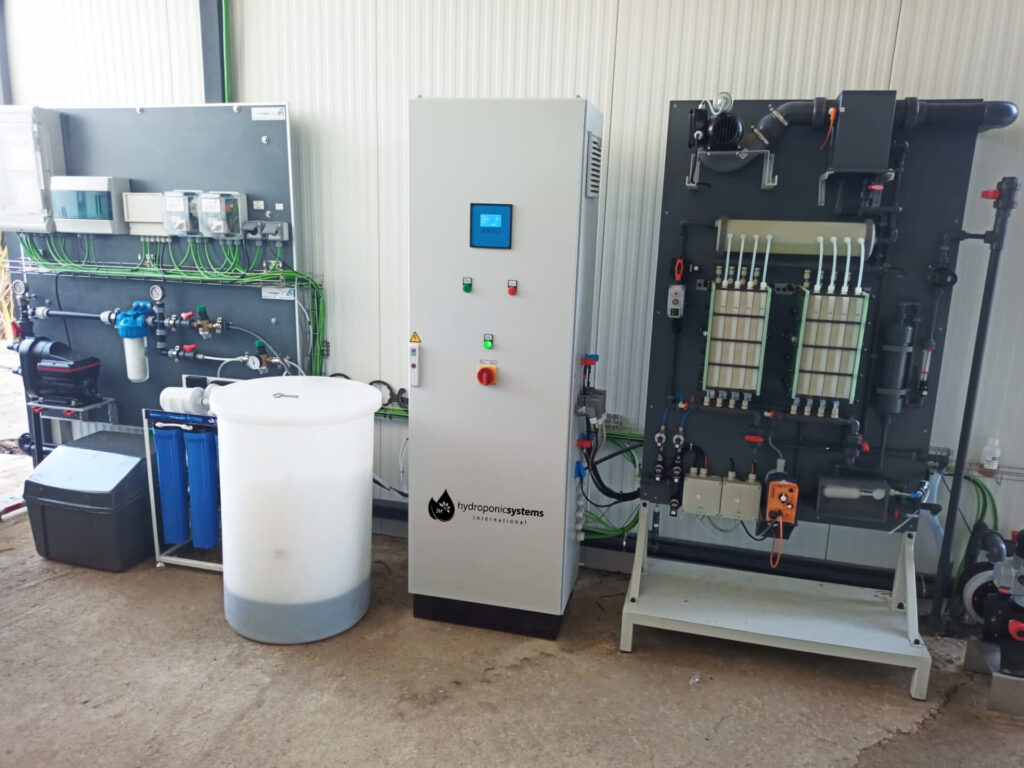
Many irrigation problems that eventually become visible at the emitters actually originate several metres upstream, inside the irrigation network.
Organic matter, microorganisms, algae, silt, carbonates and fertiliser precipitates can gradually accumulate on the internal walls of irrigation pipes, creating deposits that support the formation of a slimy microbial matrix known as biofilm.
This biofilm can trap additional particles and sediment. Over time, these deposits build up and begin to affect the narrowest sections of the irrigation system, including filters, dripper labyrinths, microtubes and irrigation stakes.
As a result, replacing a blocked dripper or flushing an irrigation lateral may temporarily restore water flow without necessarily addressing the underlying cause of the problem.
At the Mexican agricultural operation where this technology is being used, a reduction in biofilm within irrigation pipes and drippers has been observed, together with improved control of clogging and greater stability in irrigation system performance.
Continuous disinfection integrated into everyday irrigation operations
One of the main advantages of the system is its ability to integrate water treatment into the farm’s regular irrigation operations.
PHA is generated on site using sodium chloride (NaCl) as a precursor and can be dosed directly into the irrigation water. According to the operational results reported so far, the treatment is being used preventively, with no adverse effects on crops observed under the established operating conditions.
The system allows automated production and dosing, with operating parameters adapted to the water flow rate, hydraulic design and specific requirements of each installation. It can also be integrated into different irrigation configurations, including drip irrigation, sprinkler systems and hydroponic growing systems.
Another important observation from the agricultural operation is that the treatment does not contribute significantly to the electrical conductivity (EC) of the irrigation water or materially alter its pH, facilitating its integration into existing fertigation programmes.
From corrective maintenance to continuous irrigation water management
The accumulation of organic matter and biofilm also creates favourable conditions for the development and persistence of microorganisms within the irrigation network.
In large-scale farming operations, where thousands of irrigation emitters must deliver consistent performance, even a gradual reduction in flow rate can compromise fertigation uniformity and increase maintenance requirements.
The introduction of on-site PHA generation systems into the Mexican agricultural market reflects a shift in irrigation water management: reducing dependence on reactive cleaning procedures and moving towards continuous control of both the microbiological quality of irrigation water and the internal condition of the distribution network.
For professional growers dealing with recurring biofilm accumulation, overloaded filters or clogged emitters, this technology offers an additional approach to addressing the underlying problem before deposits reach the dripper and begin to affect irrigation performance.